
Série · 2007 · Peintures
En 2007, Jacques Charlier peint la vie quotidienne au cinquième millénaire. Les humains sont clonés, les androïdes ont droit à l’amour, la Terre n’est plus qu’un souvenir, et tout le monde s’habille encore comme en 1960.
Le cinquième millénaire
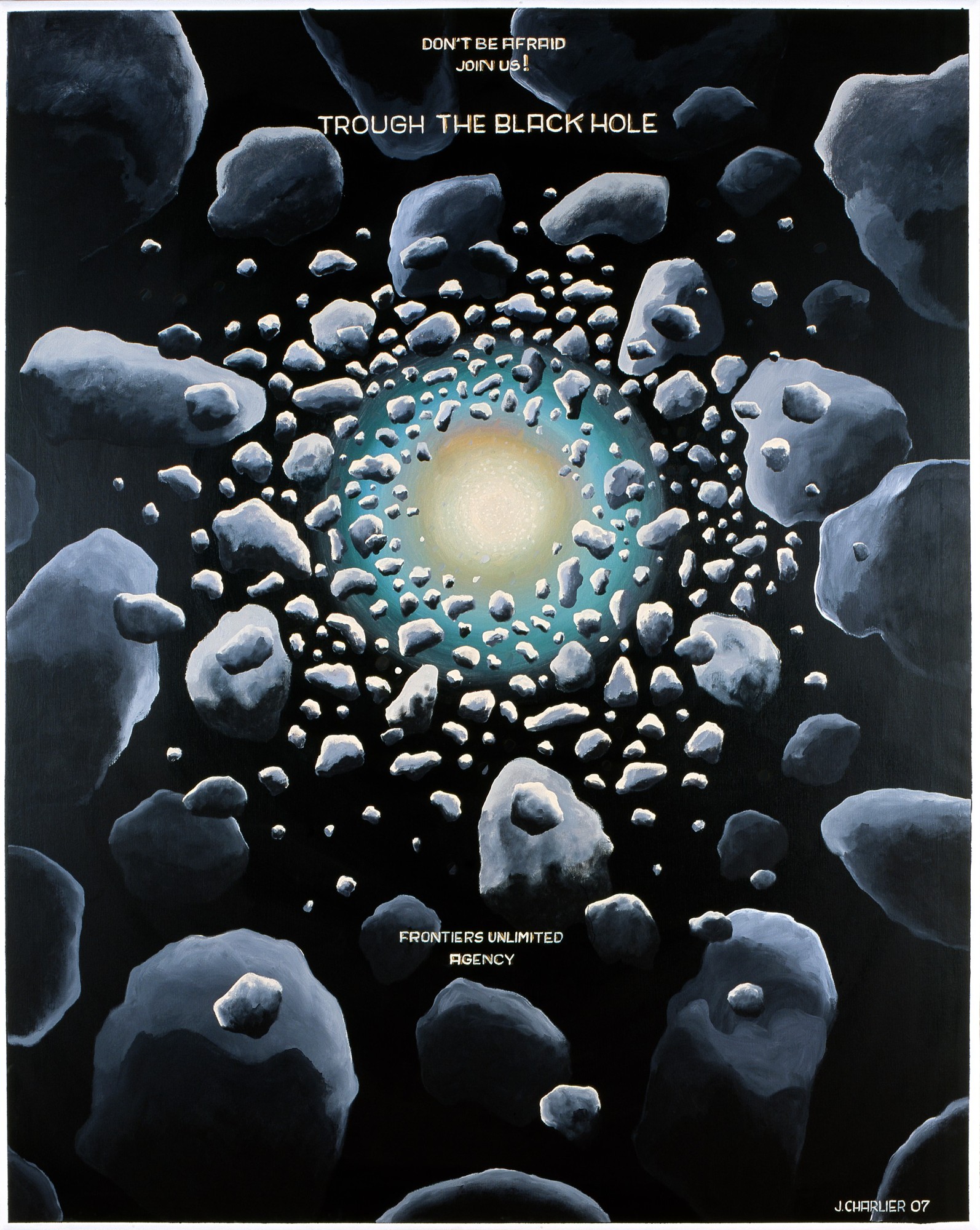
La série tient d’un récit d’anticipation dont chaque tableau serait une case. Le texte qui l’accompagne en pose le décor : « Nous sommes en 4758 et pour la plupart des humains, la Terre n’est plus qu’un lointain souvenir. » Les machines ont exploré les planètes jumelles, le métissage entre humains et robots est accompli, le clonage et la chirurgie esthétique ont uniformisé l’espèce.
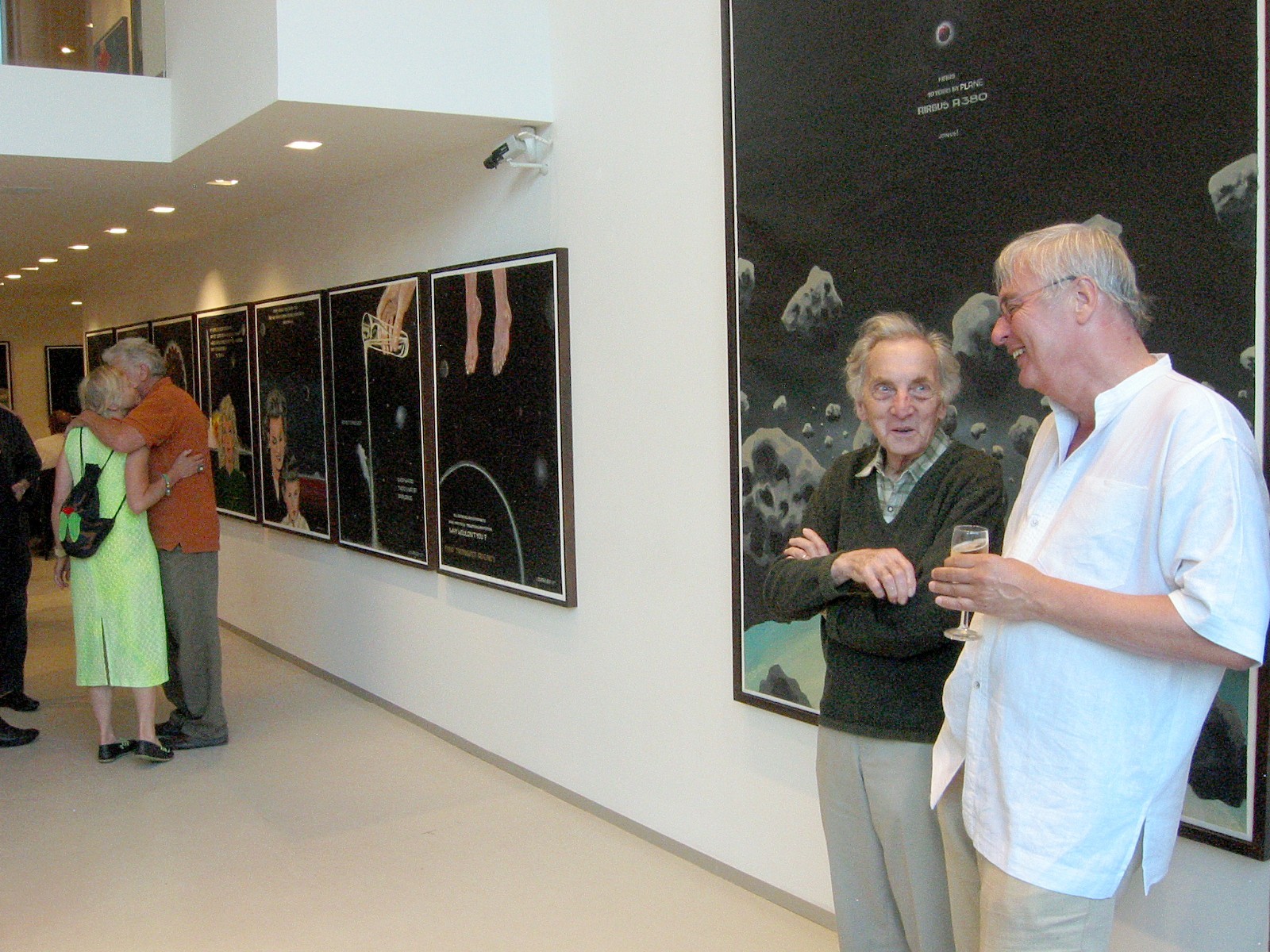
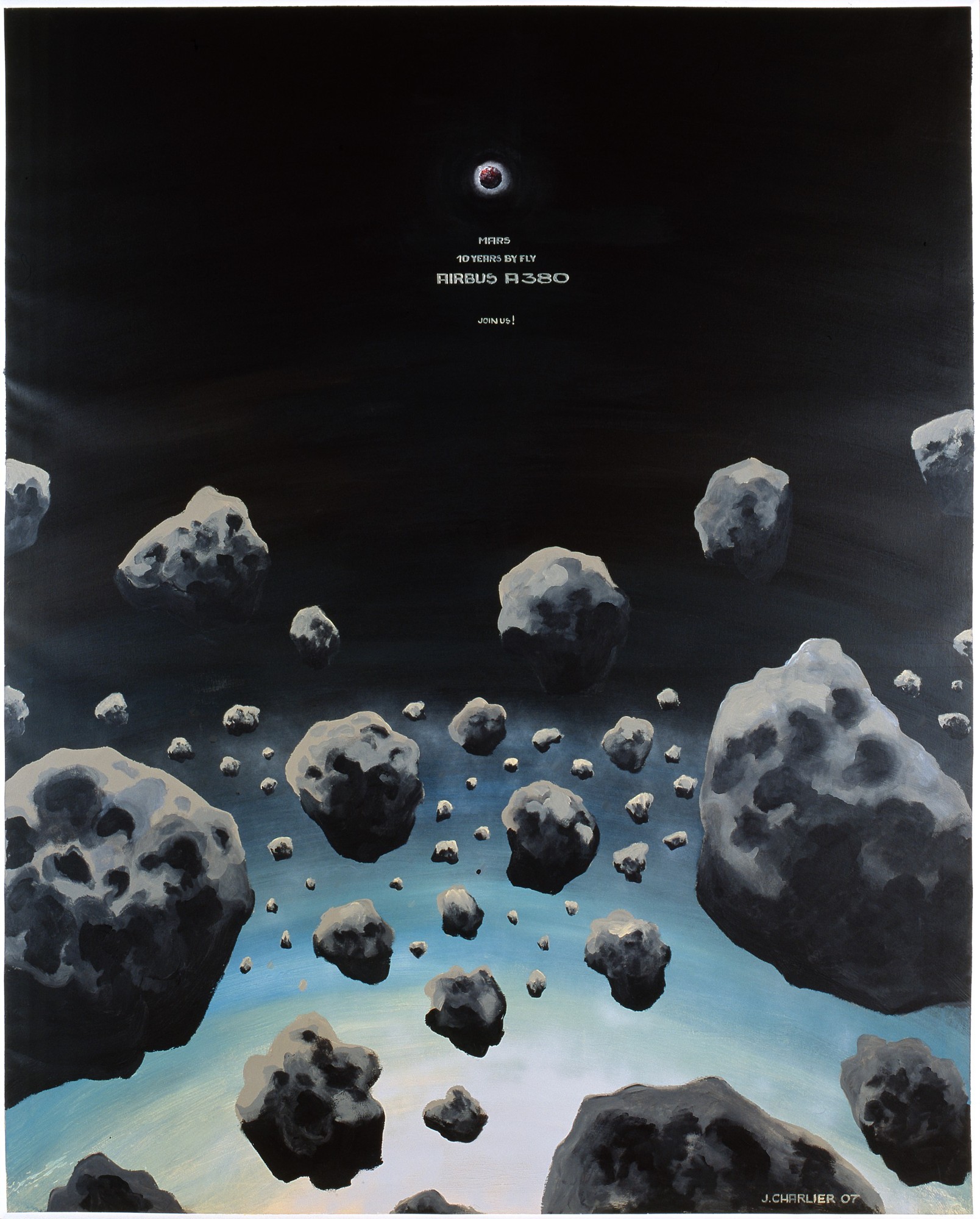
Le point de départ est une remarque de scientifiques : parmi les enfants qui naissent aujourd’hui se trouvent ceux qui fouleront le sol de Mars. Le tableau Mars en donne la mesure à l’échelle du voyageur ordinaire : « 10 years by fly, Airbus A380 ».
Les années soixante pour toujours
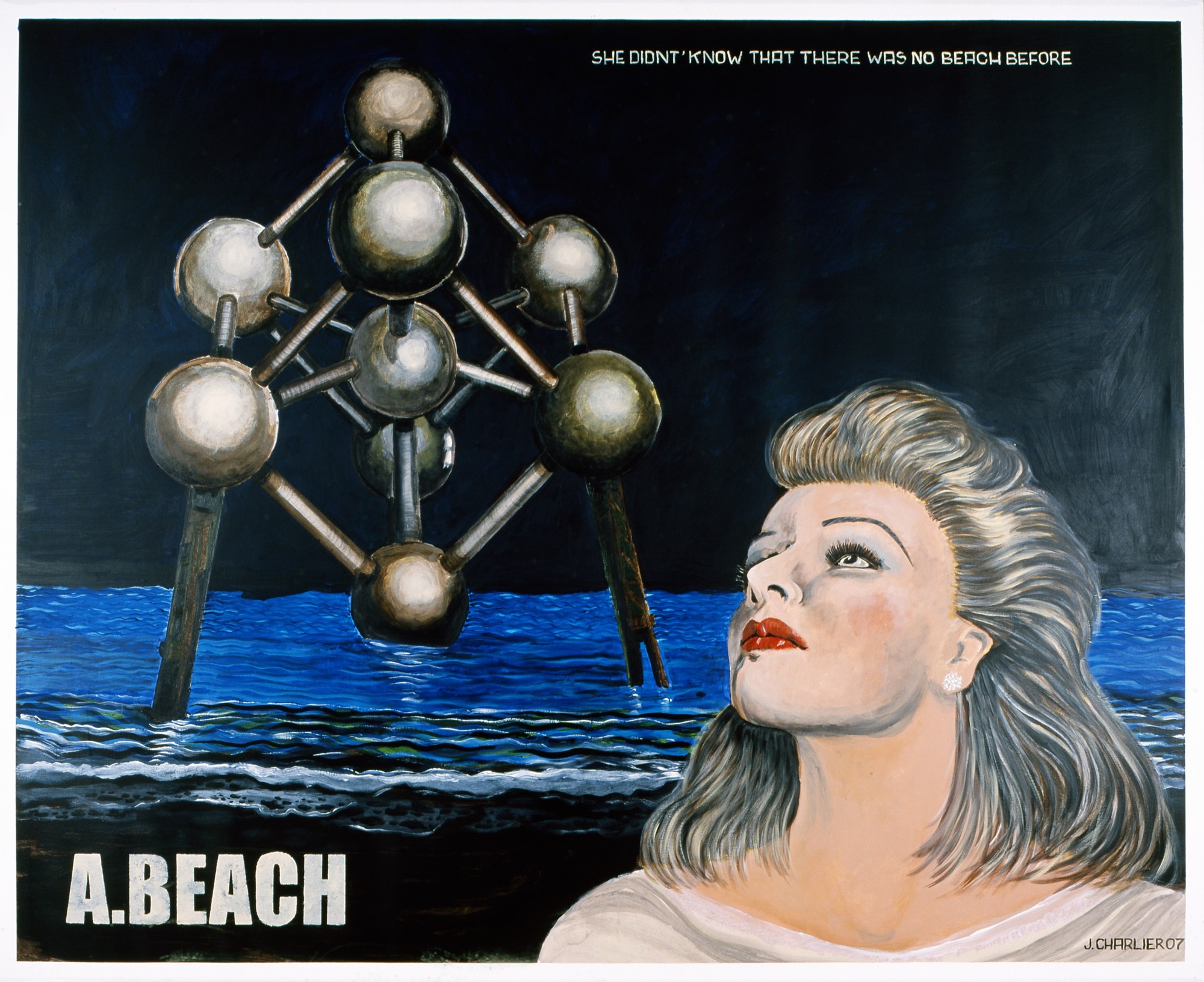
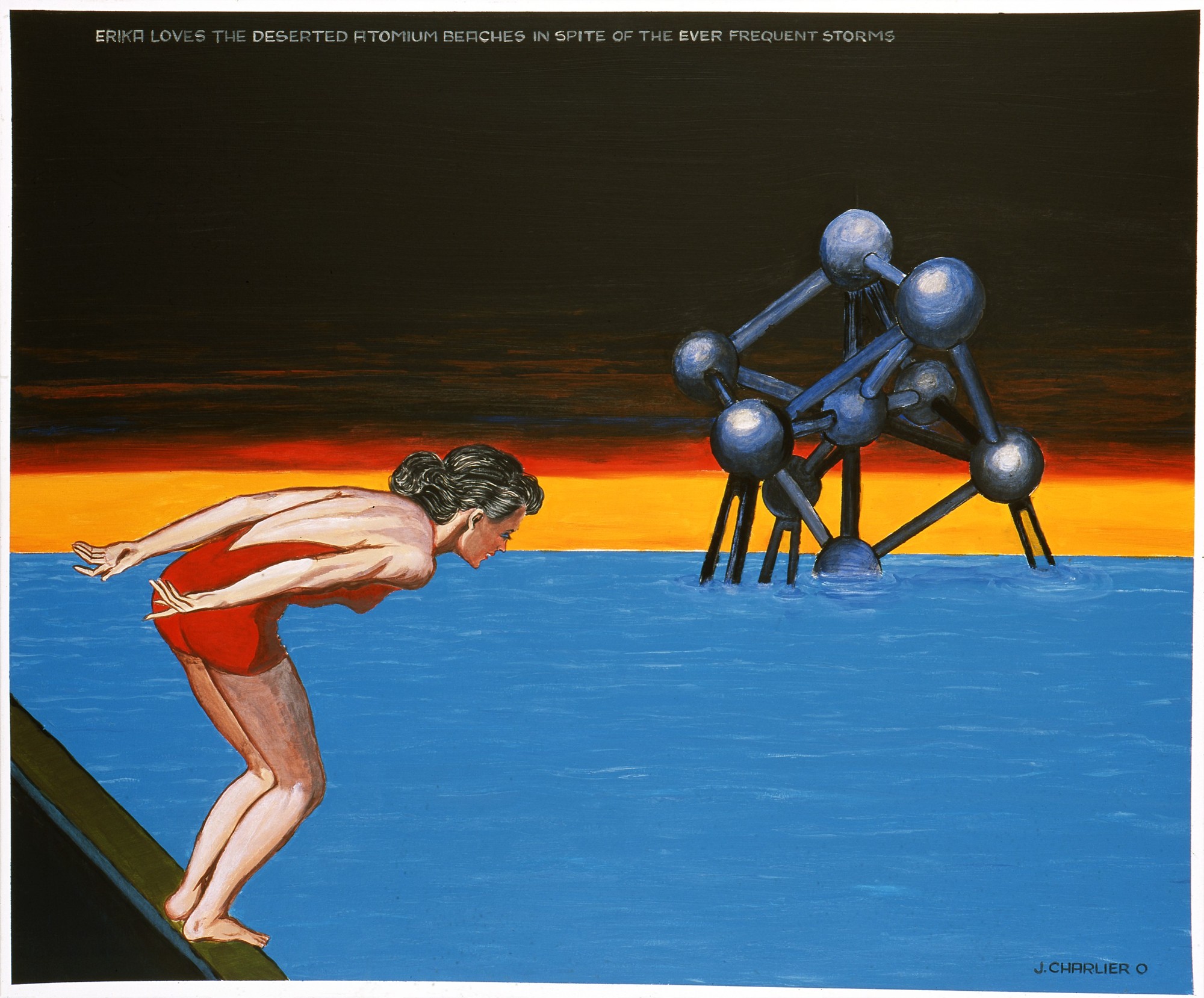
Ce futur a « définitivement adopté la mode vestimentaire et le design des années 1950/60 ». Les femmes portent des coiffures gonflantes et des robes de bal, les hommes des smokings. L’Atomium sort de la mer comme une jetée : A. Beach le pose sur une plage dont l’héroïne « ne savait pas qu’il n’y avait pas de plage avant », et Erika aime ces plages désertes « malgré les tempêtes toujours plus fréquentes ».
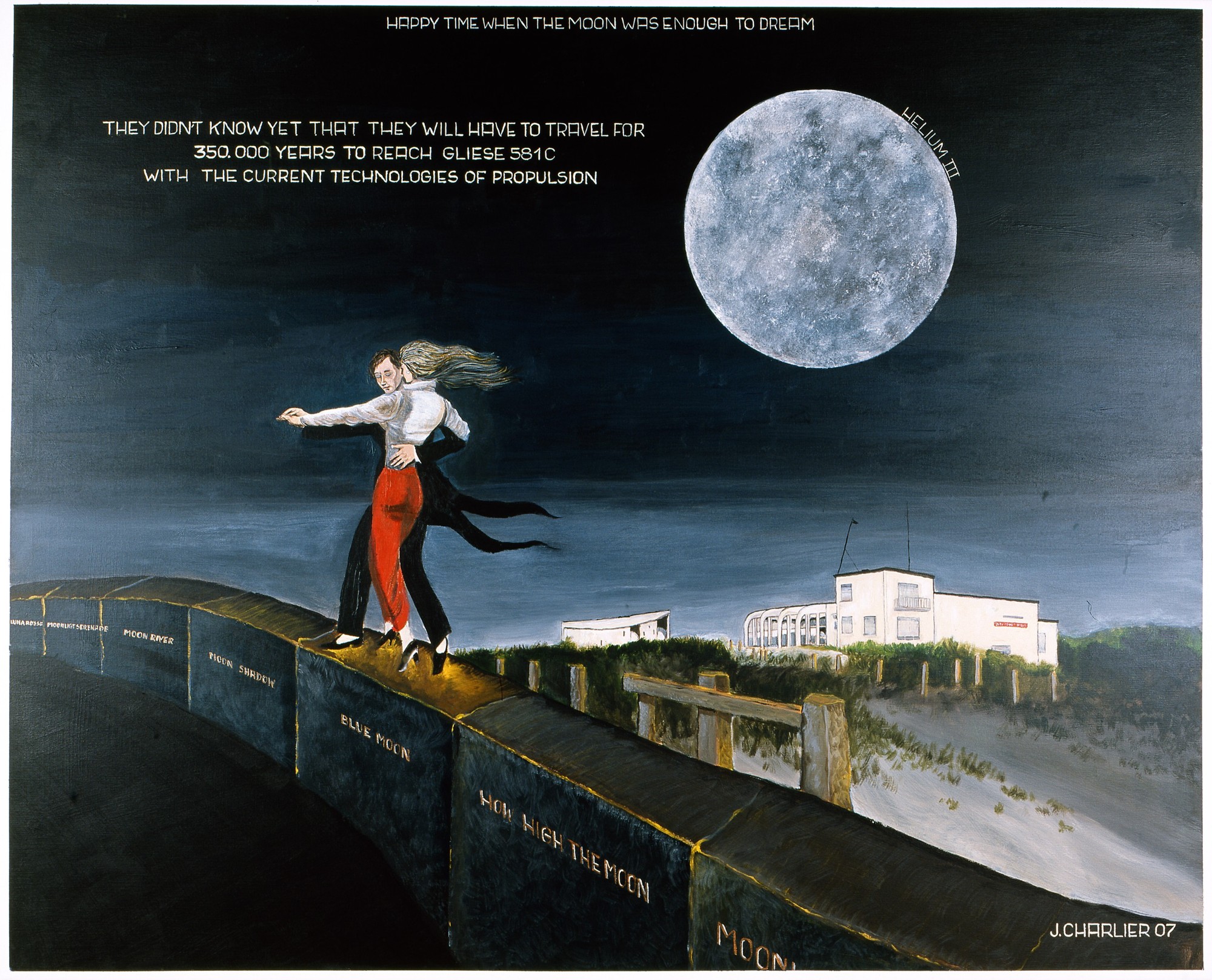
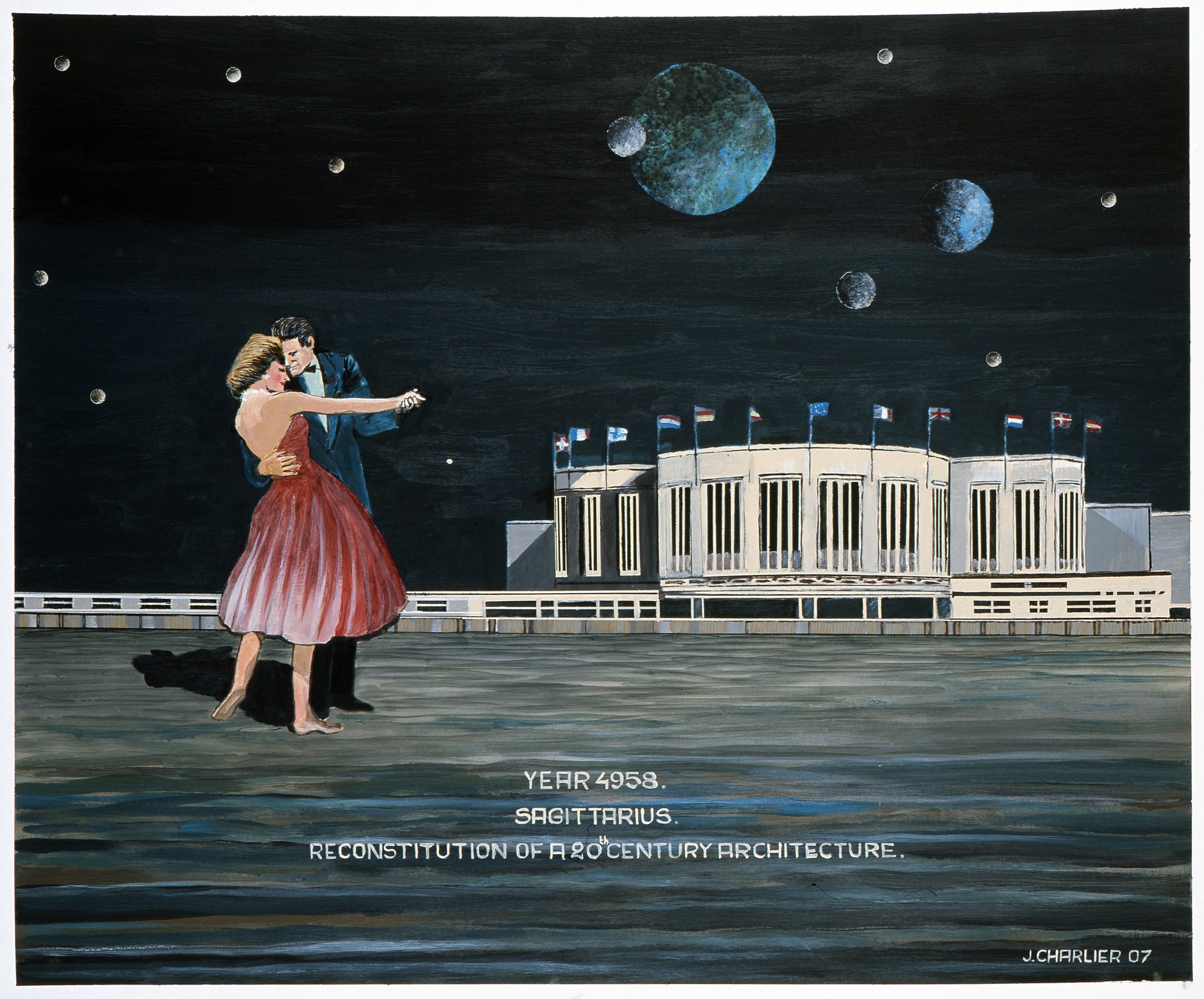
Year 4958 montre un couple qui danse devant une « reconstitution d’une architecture du XXe siècle ». Dans Helium 3, un autre couple danse sur une digue où sont gravés des titres de chansons sur la lune, sous cette légende : « Happy time when the moon was enough to dream ».
Portraits de clones
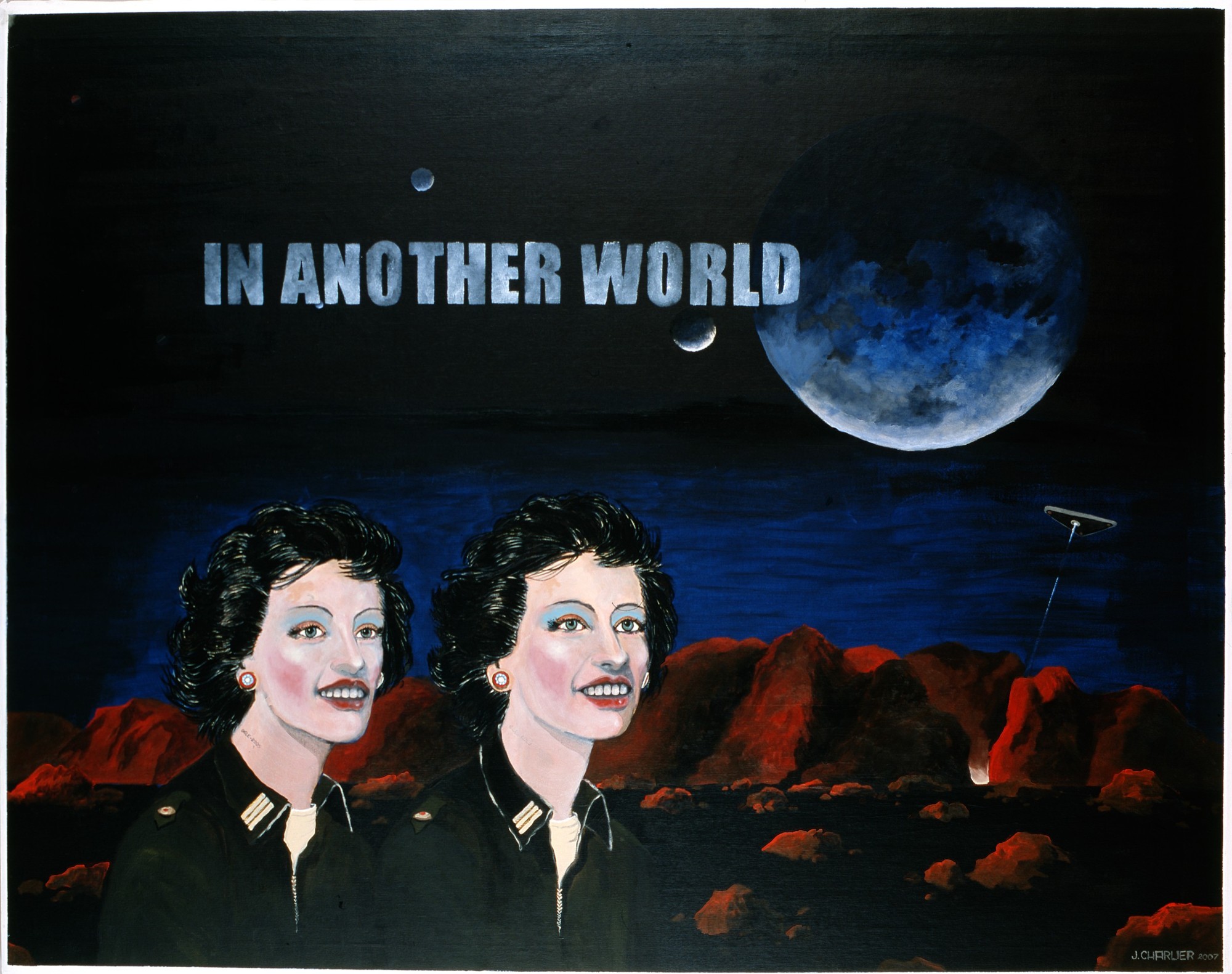
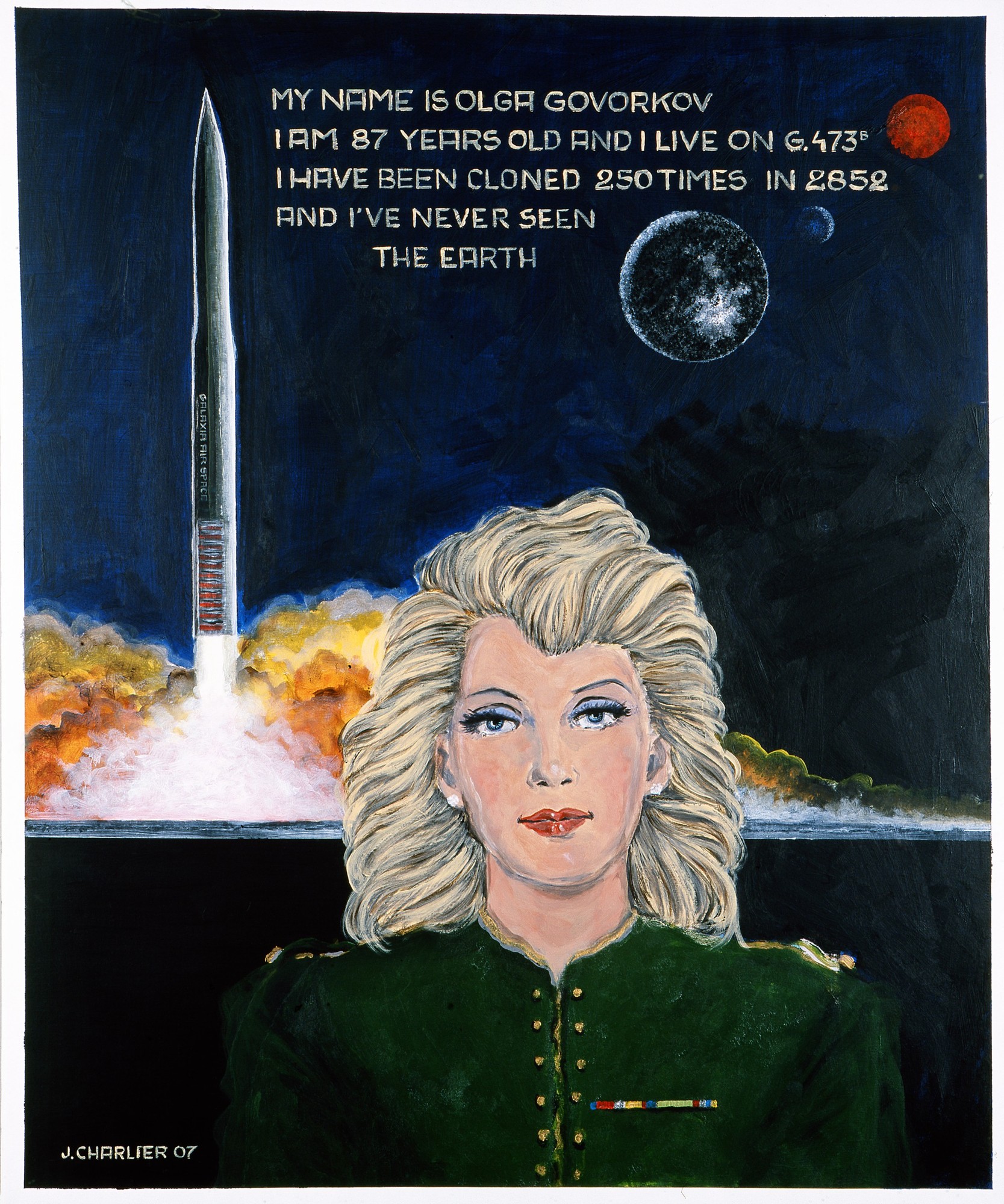
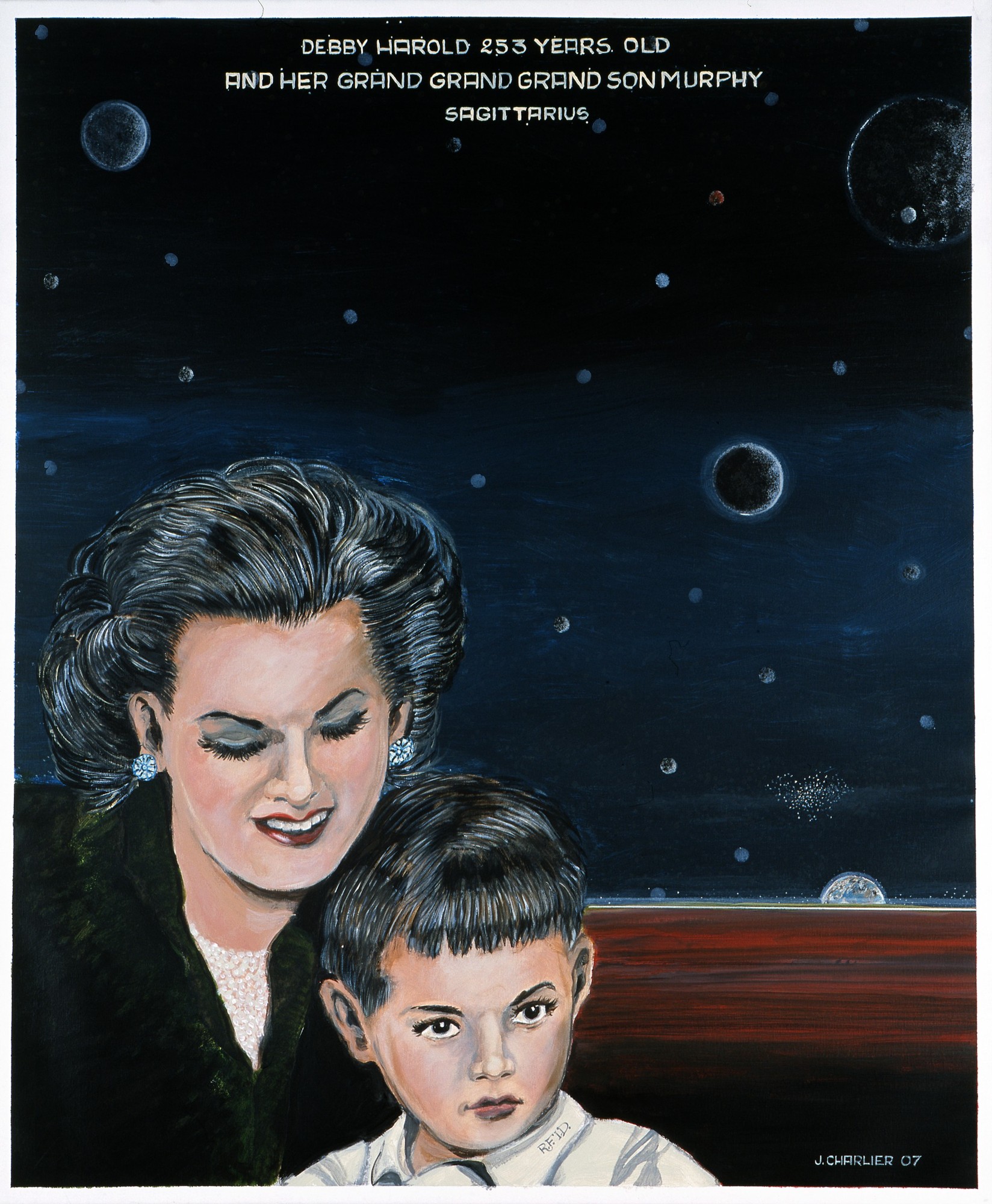
Plusieurs tableaux sont des portraits à l’ancienne, avec une notice biographique peinte dans le ciel. « My name is Olga Govorkov, I am 87 years old and I live on G.473, I have been cloned 250 times in 2852 and I’ve never seen the Earth. » Debby Harold a 253 ans et pose avec son arrière-arrière-arrière-petit-fils Murphy. Dans In Another World, deux jumelles identiques sourient devant un paysage martien.
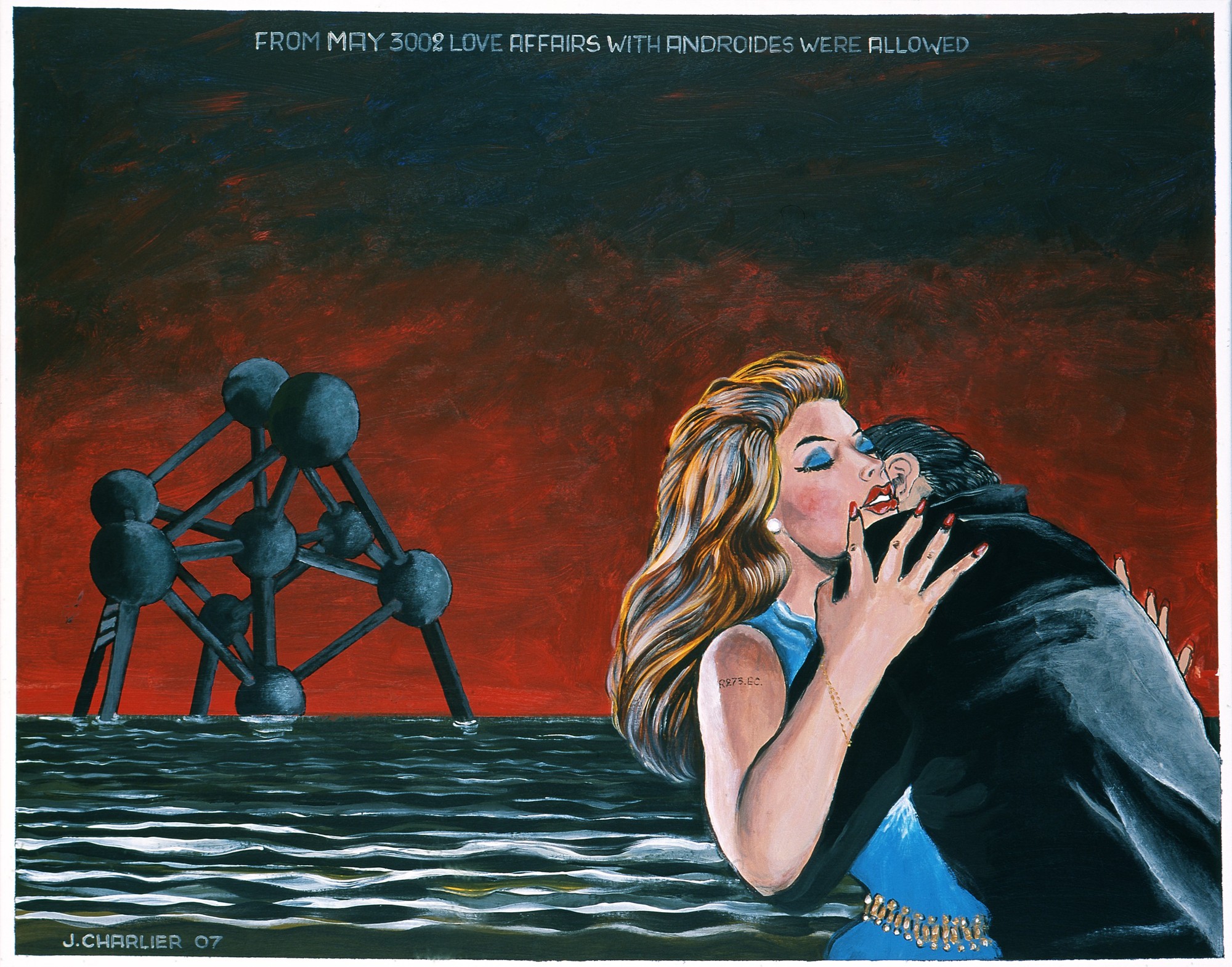
L’amour suit : May 3002 annonce qu’à partir de mai 3002 « les liaisons amoureuses avec les androïdes furent autorisées ». Le texte de la série y voit le vrai tournant : le jour où les machines ont su simuler les affects, il est devenu difficile de les débrancher.
Sans effets spéciaux
Ces thèmes appartiennent depuis longtemps au roman, à la bande dessinée et au cinéma. Charlier les reprend avec une facture « directe, narrative », sans effets spéciaux, et le texte de la série fait le pari que ces clichés rétro, par leur lisibilité mélancolique, aident mieux à appréhender le futur que les images de science-fiction habituelles.
Il prévoit aussi leur vieillissement : avec le temps, ces tableaux deviendront « de plus en plus étrangement décalés », et c’est à des descendants très éloignés qu’il laisse le soin de s’amuser de leur « naïveté prémonitoire ».
« Nous sommes en 4758 et pour la plupart des humains, la Terre n’est plus qu’un lointain souvenir. »Texte de présentation d’Art in Another World
Dix-huit tableaux
Repères
Le catalogue
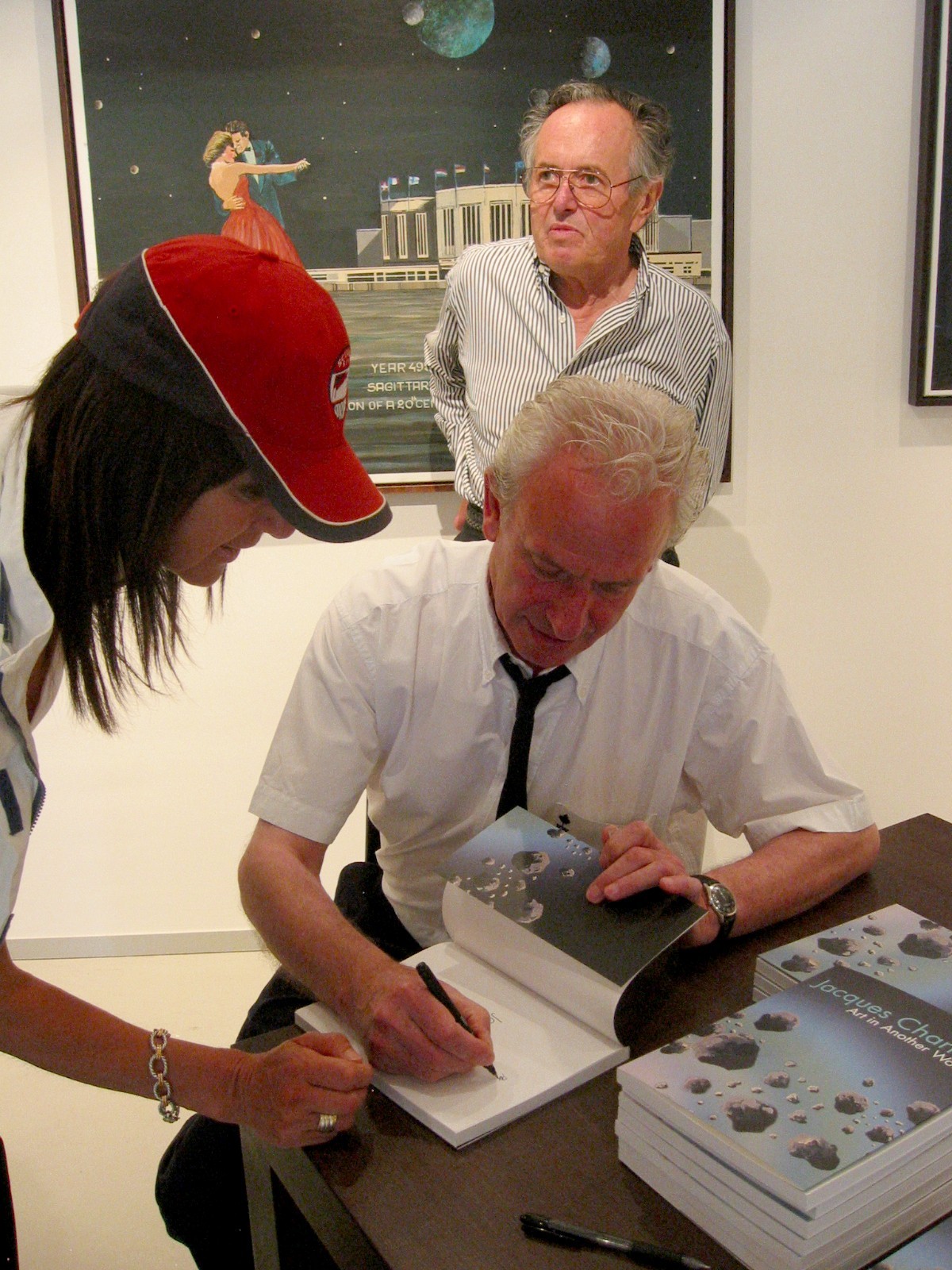
L’exposition de Knokke s’accompagne d’un catalogue, Art in Another World.
Monsieur Fantômas
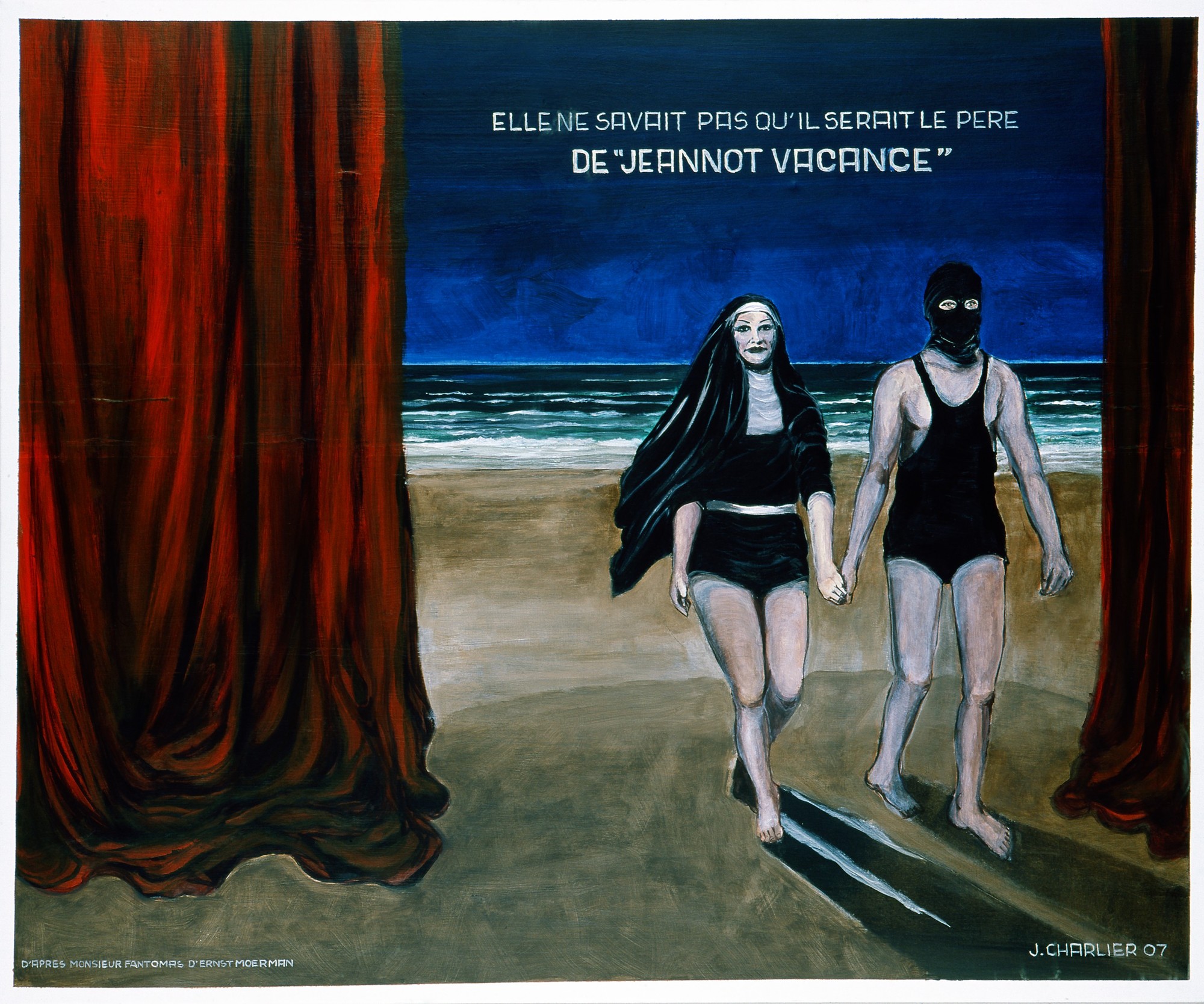
Une seule légende est en français. Sur Jeannot Vacance, un couple masqué sort d’entre deux rideaux rouges vers la mer : « Elle ne savait pas qu’il serait le père de Jeannot Vacance ». Une inscription en bas du tableau précise : « d’après Monsieur Fantômas d’Ernst Moerman ».
Gliese 581 c
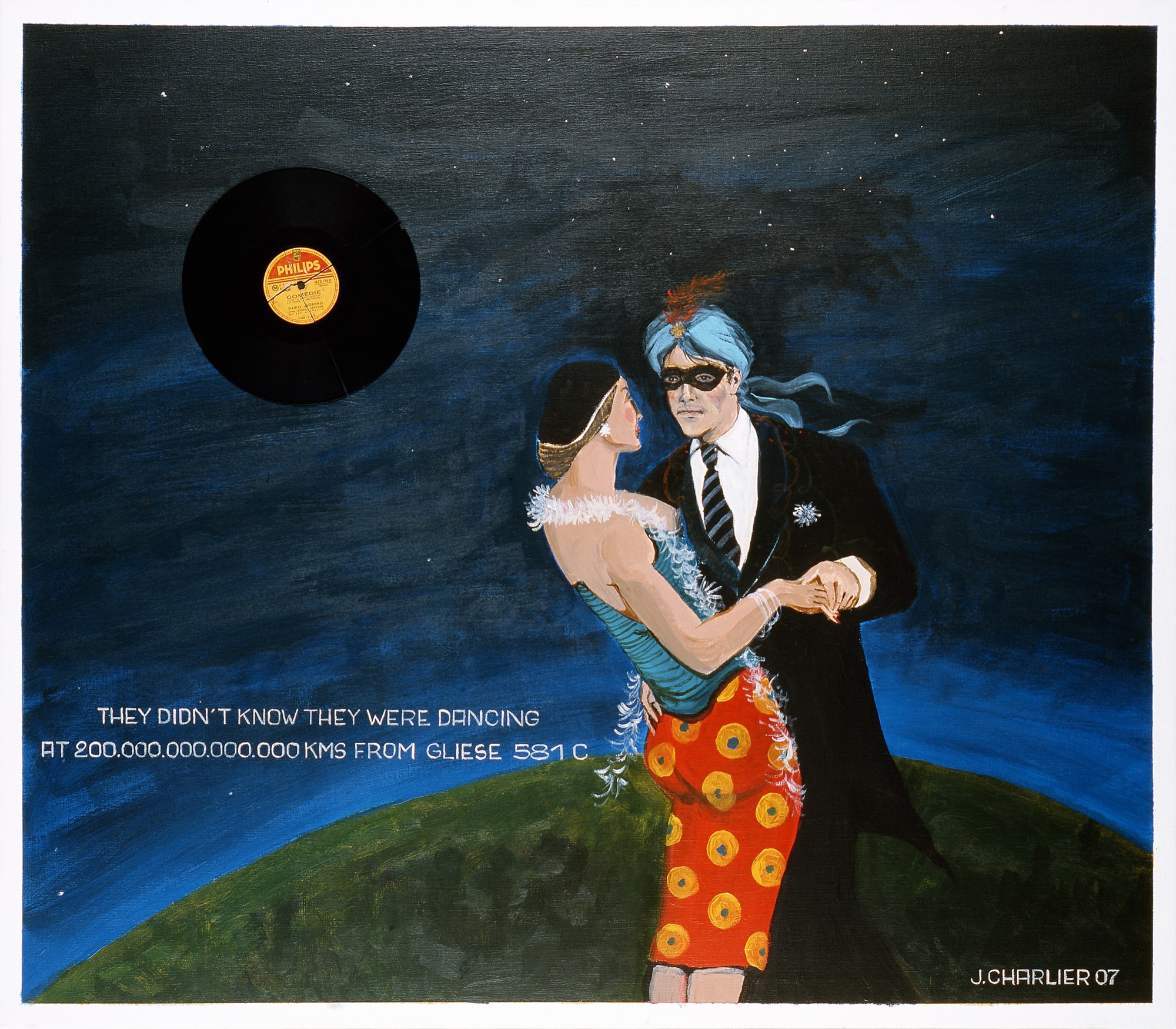
Plusieurs légendes mesurent les distances en années de voyage. Un couple danse « à 200 000 000 000 000 km de Gliese 581 c », sous un disque Philips qui tient lieu de lune.
Où la série a été montrée
Continuer la visite
Series · 2007 · Paintings
In 2007, Jacques Charlier painted everyday life in the fifth millennium. Humans are cloned, androids are allowed to love, the Earth is no more than a memory, and everyone still dresses as if it were 1960.
The fifth millennium
The series reads like a science-fiction story in which each painting is a frame. The text that goes with it sets the scene: “It is the year 4758 and for most humans the Earth is no more than a distant memory.” Machines have explored the Earth’s twin planets, humans and robots have interbred, and cloning and cosmetic surgery have made the species uniform.
The starting point is a remark by scientists: among the children born today are those who will set foot on Mars. The painting Mars puts it on the scale of the ordinary traveller: “10 years by fly, Airbus A380”.
The sixties forever
This future has “definitively adopted the fashion and design of the 1950s and 60s”. Women wear bouffant hair and ball gowns, men wear dinner jackets. The Atomium rises from the sea like a pier: A. Beach sets it on a beach whose heroine “didn’t know that there was no beach before”, and Erika loves these deserted beaches “in spite of the ever frequent storms”.
Year 4958 shows a couple dancing in front of a “reconstitution of a 20th century architecture”. In Helium 3, another couple dances on a sea wall engraved with titles of songs about the moon, under the caption: “Happy time when the moon was enough to dream”.
Portraits of clones
Several paintings are old-fashioned portraits, with a short biography painted across the sky. “My name is Olga Govorkov, I am 87 years old and I live on G.473, I have been cloned 250 times in 2852 and I’ve never seen the Earth.” Debby Harold is 253 years old and poses with her great-great-great-grandson Murphy. In In Another World, identical twins smile in front of a Martian landscape.
Love follows: May 3002 announces that from May 3002 “love affairs with androids were allowed”. The text of the series sees this as the real turning point: once machines could simulate feelings, it became hard to switch them off.
No special effects
These themes have long belonged to the novel, the comic strip and the cinema. Charlier takes them up in a “direct, narrative” manner, without special effects, and the text of the series wagers that these retro clichés, through their melancholy legibility, help us grasp the future better than the usual science-fiction images.
It also anticipates their ageing: over time these paintings will become “more and more strangely out of step”, and it leaves it to very distant descendants to be amused by their “premonitory naivety”.
“It is the year 4758 and for most humans the Earth is no more than a distant memory.”Presentation text for Art in Another World
Eighteen paintings
Reference points
The catalogue
The Knokke exhibition came with a catalogue, Art in Another World.
Monsieur Fantômas
Only one caption is in French. On Jeannot Vacance, a masked couple walks out between two red curtains towards the sea: “Elle ne savait pas qu’il serait le père de Jeannot Vacance” (She didn’t know he would be the father of Jeannot Vacance). An inscription at the bottom adds: “after Monsieur Fantômas by Ernst Moerman”.
Gliese 581 c
Several captions measure distance in years of travel. A couple dances “at 200,000,000,000,000 km from Gliese 581 c”, under a Philips record that serves as the moon.
Where the series was shown
Continue the visit
Reeks · 2007 · Schilderijen
In 2007 schildert Jacques Charlier het dagelijkse leven in het vijfde millennium. Mensen worden gekloond, androïden mogen liefhebben, de Aarde is nog slechts een herinnering, en iedereen kleedt zich nog altijd als in 1960.
Het vijfde millennium
De reeks leest als een sciencefictionverhaal waarvan elk schilderij een prentje is. De begeleidende tekst schetst het decor: ‘We zijn in 4758 en voor de meeste mensen is de Aarde nog slechts een verre herinnering.’ Machines hebben de tweelingplaneten van de Aarde verkend, mens en robot zijn vermengd, klonen en plastische chirurgie hebben de soort eenvormig gemaakt.
Het vertrekpunt is een opmerking van wetenschappers: onder de kinderen die vandaag geboren worden, zijn er die voet zullen zetten op Mars. Het schilderij Mars brengt het terug tot de maat van de gewone reiziger: ‘10 years by fly, Airbus A380’.
Voor altijd de jaren zestig
Deze toekomst heeft ‘definitief de kledingmode en het design van de jaren 1950/60 overgenomen’. Vrouwen dragen opgestoken haar en baljurken, mannen een smoking. Het Atomium rijst uit zee op als een pier: A. Beach plaatst het op een strand waarvan de heldin ‘niet wist dat er vroeger geen strand was’, en Erika houdt van die verlaten stranden ‘ondanks de steeds frequentere stormen’.
Year 4958 toont een dansend paar voor een ‘reconstructie van een twintigste-eeuwse architectuur’. In Helium 3 danst een ander paar op een zeedijk waarin titels van liedjes over de maan gegraveerd staan, onder het opschrift: ‘Happy time when the moon was enough to dream’.
Portretten van klonen
Verschillende schilderijen zijn ouderwetse portretten, met een korte biografie in de lucht geschilderd. ‘My name is Olga Govorkov, I am 87 years old and I live on G.473, I have been cloned 250 times in 2852 and I’ve never seen the Earth.’ Debby Harold is 253 jaar oud en poseert met haar achter-achter-achterkleinzoon Murphy. In In Another World glimlachen twee identieke tweelingzussen voor een Marslandschap.
De liefde volgt: May 3002 meldt dat vanaf mei 3002 ‘liefdesrelaties met androïden toegestaan werden’. De tekst van de reeks ziet daarin het echte keerpunt: zodra machines gevoelens konden nabootsen, werd het moeilijk ze uit te schakelen.
Zonder speciale effecten
Deze thema’s behoren al lang tot de roman, het stripverhaal en de film. Charlier neemt ze op in een ‘directe, verhalende’ stijl, zonder speciale effecten, en de tekst van de reeks gokt erop dat deze retroclichés, door hun melancholische leesbaarheid, ons de toekomst beter doen vatten dan de gebruikelijke sciencefictionbeelden.
Hij voorziet ook hun veroudering: na verloop van tijd zullen deze schilderijen ‘steeds vreemder uit de pas lopen’, en het is aan heel verre nakomelingen om zich te vermaken met hun ‘voorspellende naïviteit’.
‘We zijn in 4758 en voor de meeste mensen is de Aarde nog slechts een verre herinnering.’Presentatietekst bij Art in Another World
Achttien schilderijen
Aanknopingspunten
De catalogus
Bij de tentoonstelling in Knokke hoort een catalogus, Art in Another World.
Monsieur Fantômas
Slechts één opschrift is in het Frans. Op Jeannot Vacance stapt een gemaskerd paar tussen twee rode gordijnen door naar de zee: ‘Elle ne savait pas qu’il serait le père de Jeannot Vacance’ (Ze wist niet dat hij de vader van Jeannot Vacance zou worden). Een opschrift onderaan voegt toe: ‘naar Monsieur Fantômas van Ernst Moerman’.
Gliese 581 c
Verschillende opschriften meten afstanden in reisjaren. Een paar danst ‘op 200.000.000.000.000 km van Gliese 581 c’, onder een Philips-plaat die als maan dienst doet.