
Série · 1990–1993 · Peintures et objets
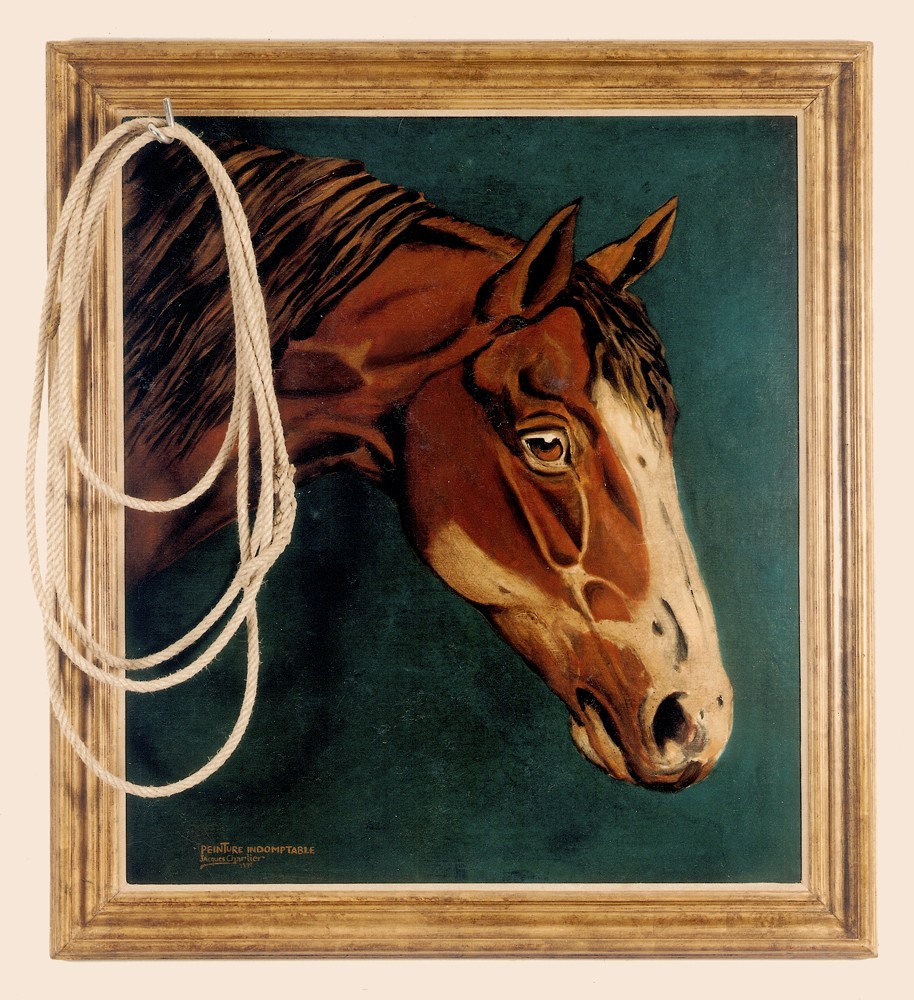
Au début des années 1990, Jacques Charlier peint des tableaux qui obéissent à leur titre. La Peinture indomptable reçoit une corde, la Peinture de pêche une canne, la Peinture à bout de souffle un tube dans lequel souffler.
Le titre fait loi
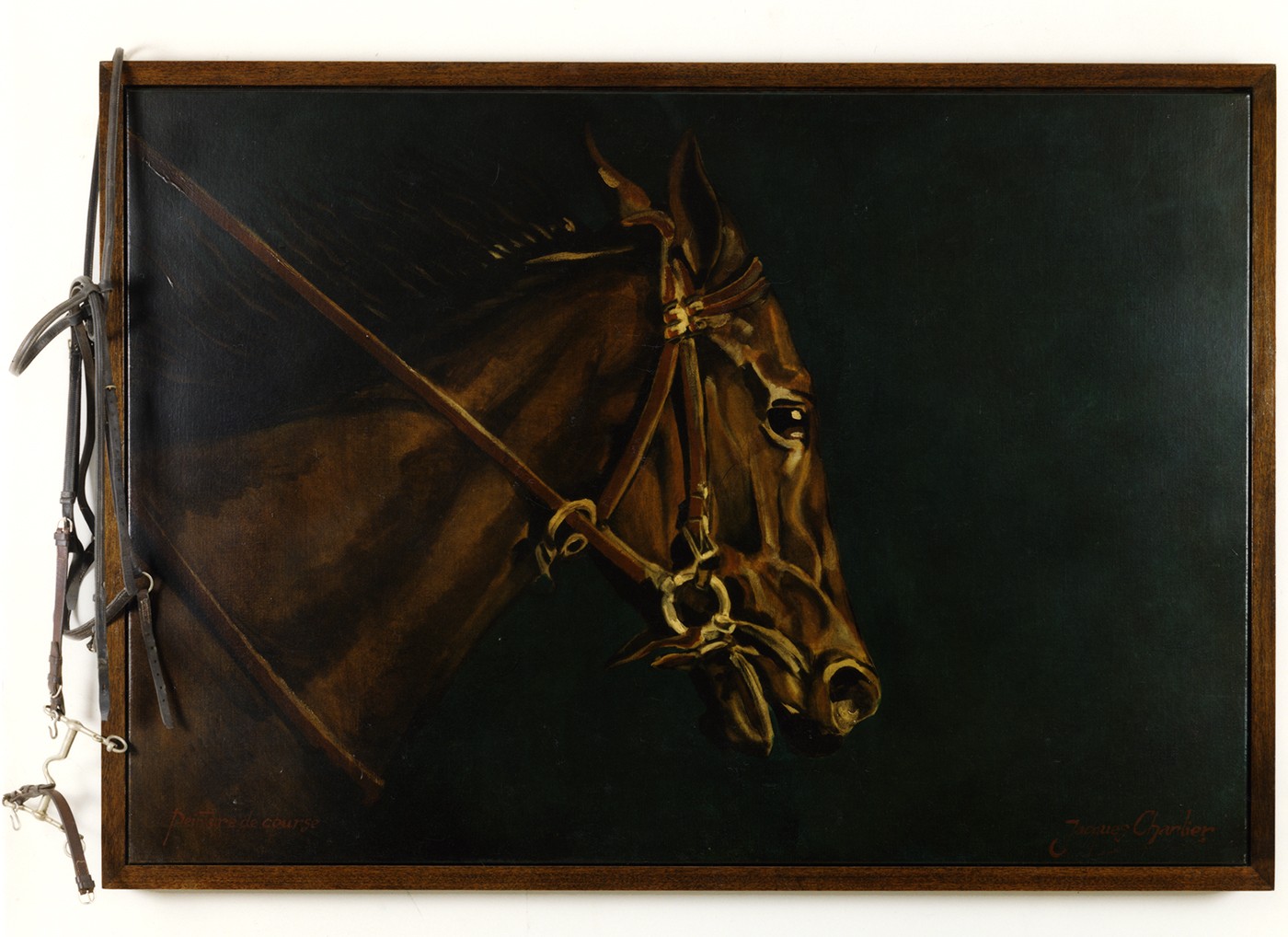
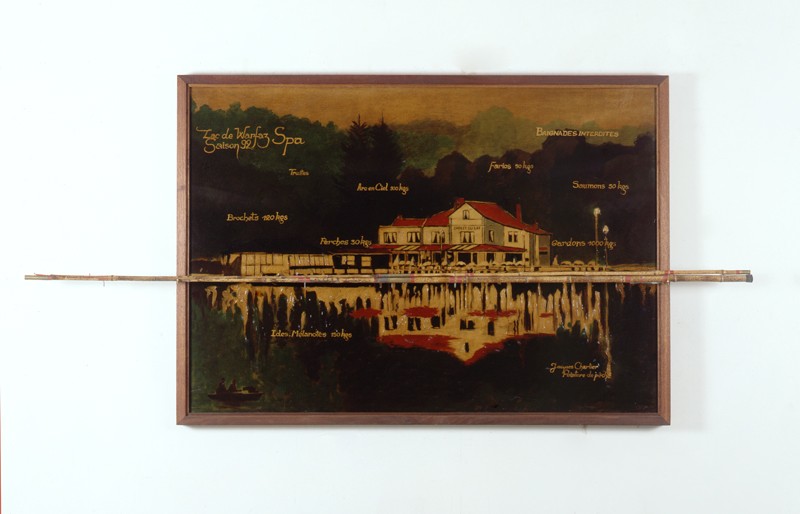
Chaque tableau part d’une expression toute faite, calligraphiée sur la toile comme une légende d’autrefois, puis exécutée au pied de la lettre. Un cheval à l’œil inquiet et une corde enroulée sur le cadre : Peinture indomptable. Une tête de pur-sang et son harnachement accroché au châssis : Peinture de course. Une vue du lac de Warfaz, à Spa, traversée par une canne : Peinture de pêche.
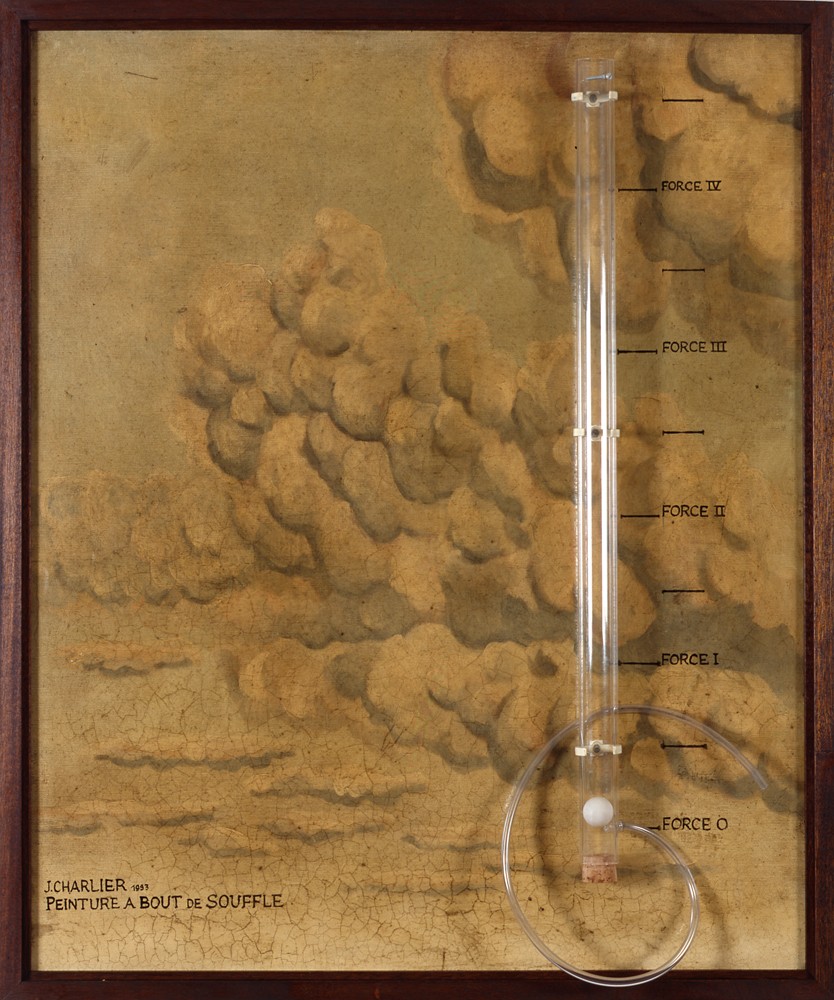
L’objet réel vient chaque fois tenir la promesse du titre, et la peinture se retrouve prise à son propre jeu de mots. Dans Peinture à bout de souffle, un tube gradué de « Force 0 » à « Force IV » attend, devant un ciel de nuages, que le visiteur vienne y mesurer le sien.
Des tableaux déjà vieux
Rien, à première vue, ne date ces œuvres des années 1990. Patine brune, craquelures, cadres dorés ou d’époque : elles ont l’air de sortir d’un grenier ou d’un salon de province. C’est un parti pris. Sergio Bonati note qu’à partir de 1986, le recours aux cadres d’époque, au vieillissement et aux craquelures artificielles va en s’accentuant chez Charlier, et que les objets trouvés sur les brocantes font leur réapparition, « avec une volonté affirmée de casser les styles, de créer la confusion ».
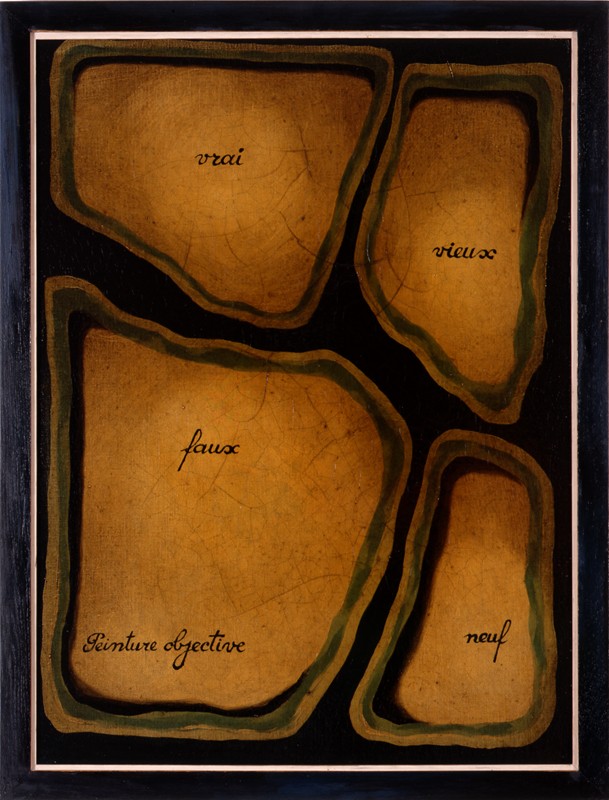
Peinture objective en fait son sujet : quatre plages craquelées portent les mots « vrai », « vieux », « faux » et « neuf », sans qu’il soit possible de dire laquelle mérite son étiquette.
Le monde de l’art au trot
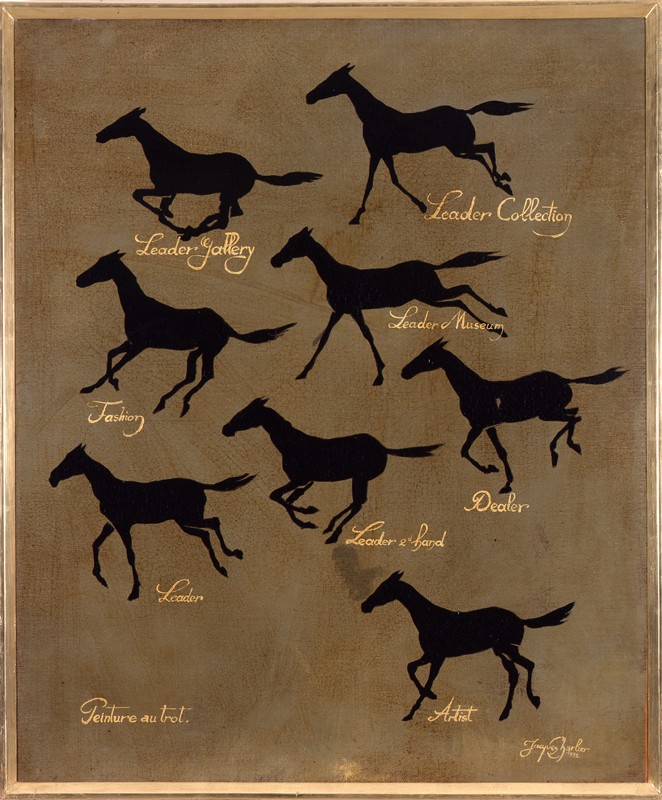
La satire du milieu, constante chez Charlier, passe ici par le tableau de genre. Dans Peinture au trot, huit chevaux en silhouette portent chacun un nom : Leader Gallery, Leader Collection, Leader Museum, Fashion, Dealer, Leader 2d hand, Leader. Le dernier, tout en bas, s’appelle Artist.
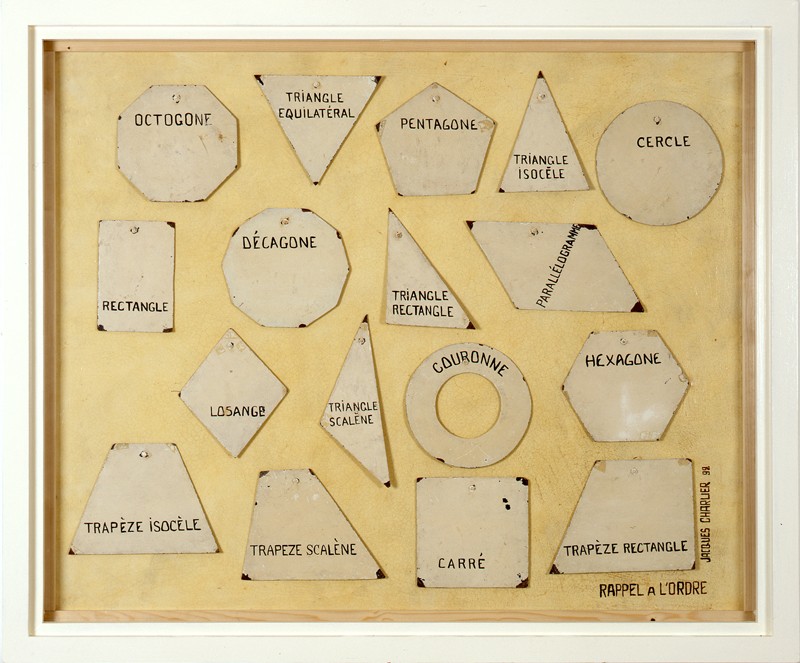
Rappel à l’ordre range sous verre des plaques de formes géométriques soigneusement nommées, de l’octogone au trapèze rectangle : l’abstraction ramenée à une planche de vocabulaire.
Brouiller les pistes
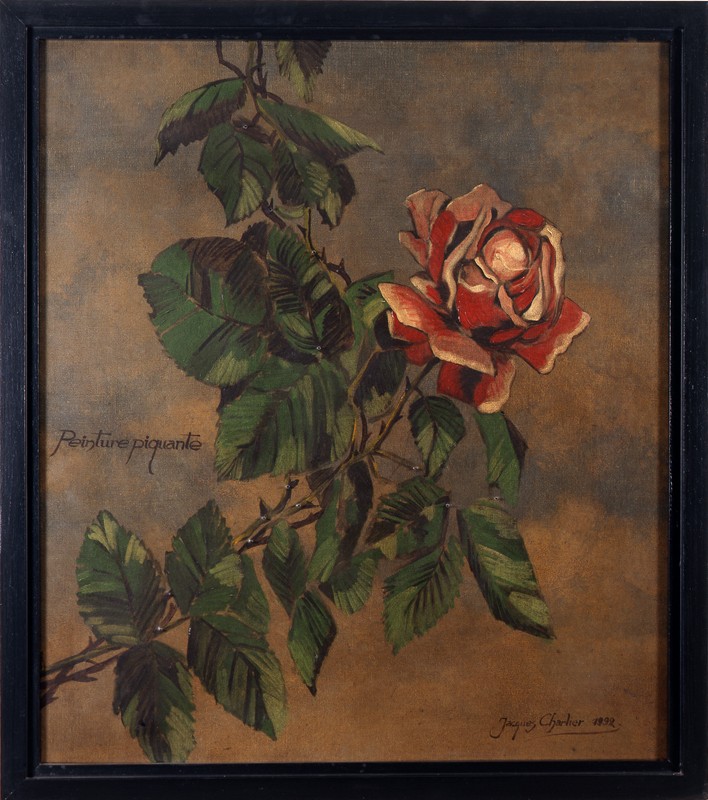
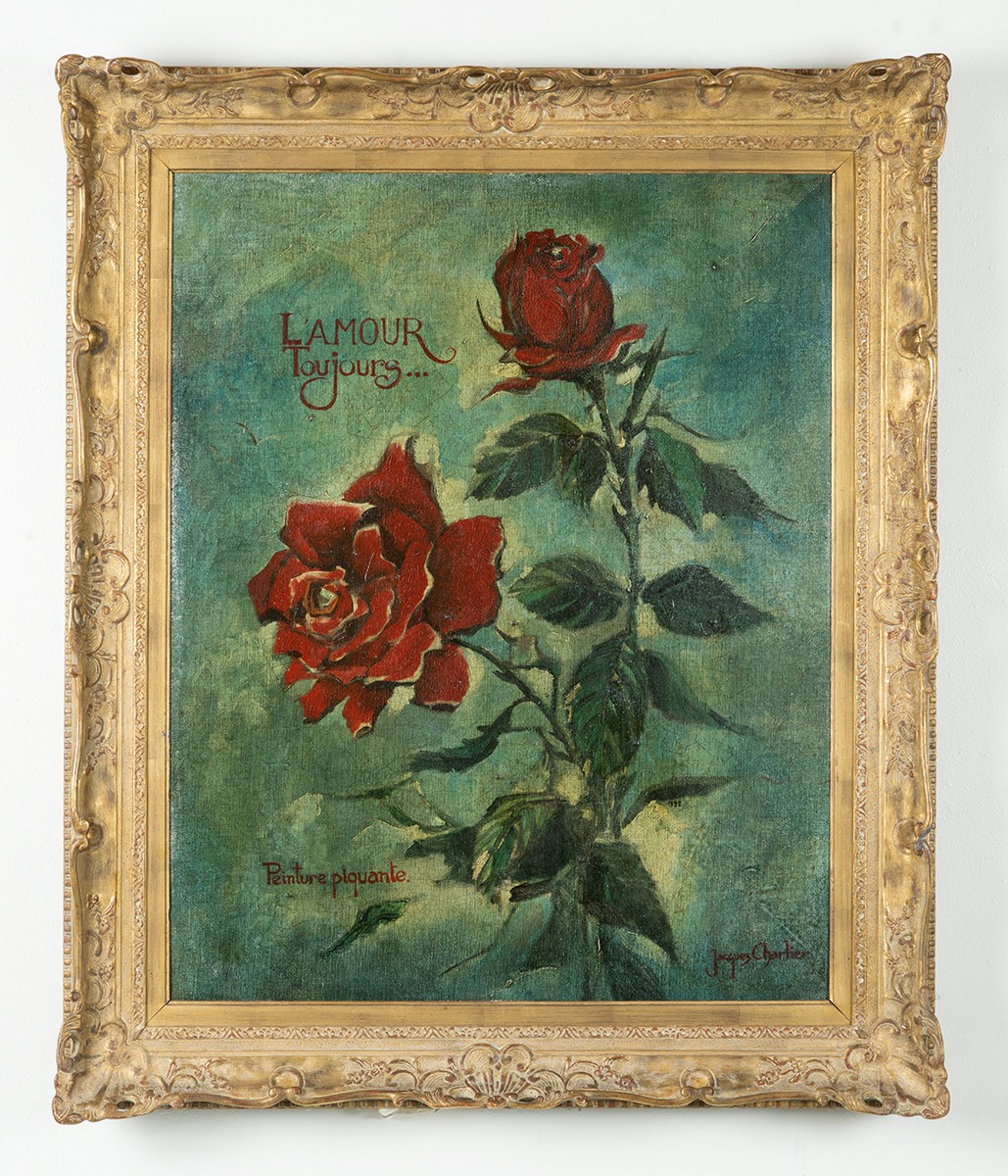
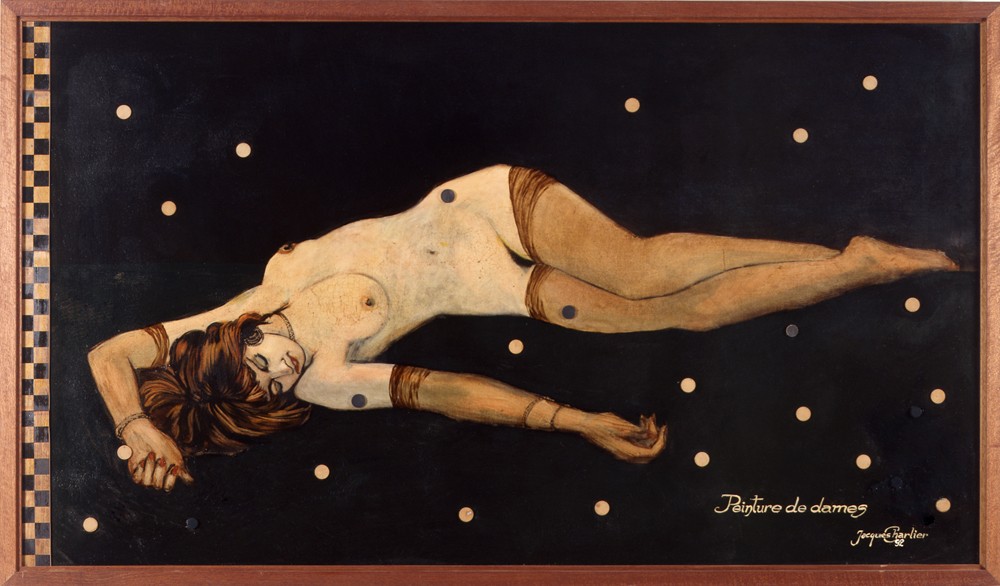
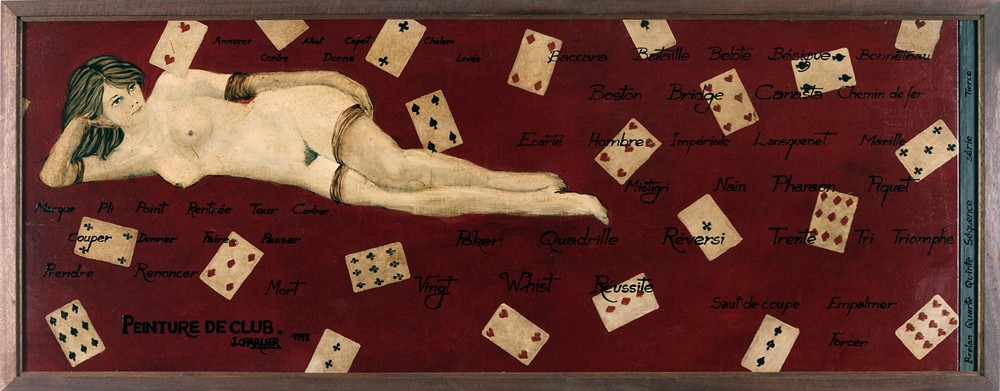
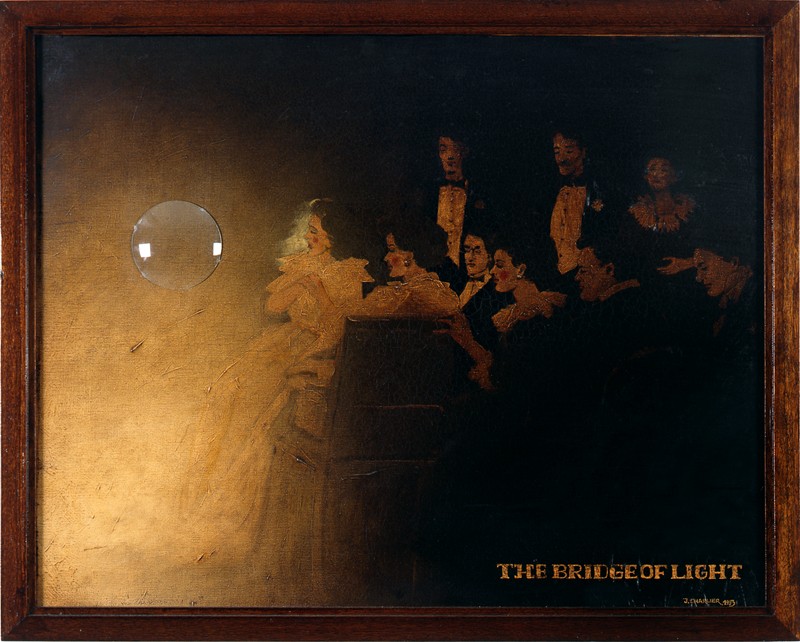
Nature morte à la rose, portrait équestre, nu couché, scène mondaine : d’un tableau à l’autre, le genre, la technique et l’époque supposée changent. La série ne se reconnaît pas à un style mais à une méthode, et c’est en cela que ces peintures sont « impossibles » à ranger. En 1996, le Centre d’Art et de Plaisanteries de Montbéliard leur consacre une exposition qui porte leur nom.
« Passer d’un tableau à l’autre, d’une scène, d’une technique à l’autre, inlassablement, pour brouiller les pistes, a donc constitué l’essentiel de ce que Charlier appelle avec insistance ses activités. »Sergio Bonati, 1999
Les œuvres
Repères
Dans les collections
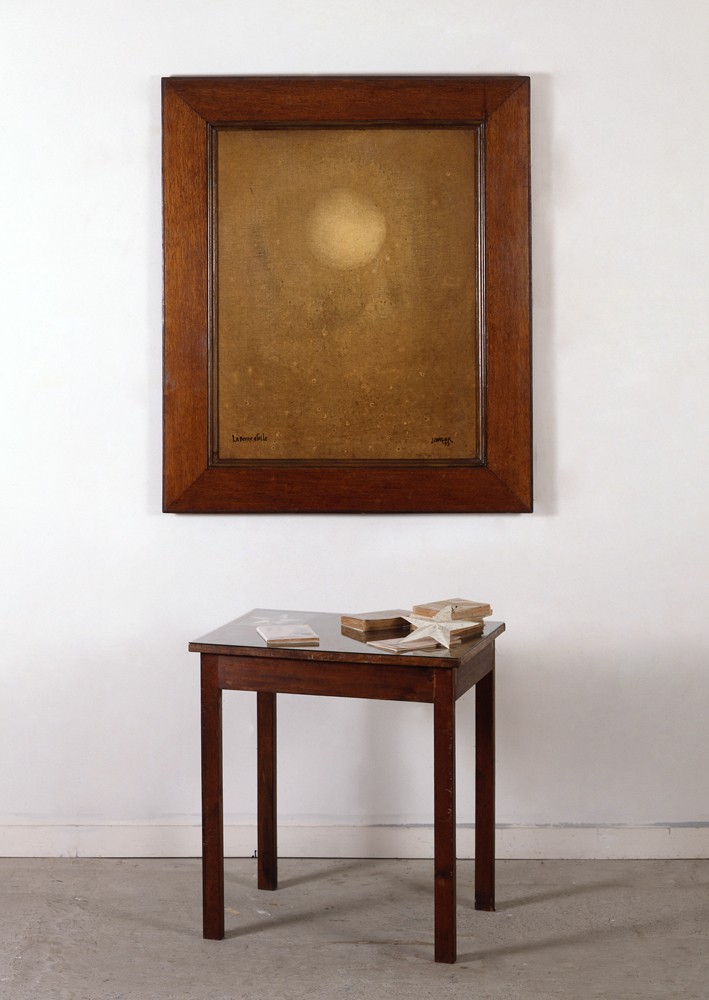
Trois œuvres de la série sont entrées dans des collections publiques : Peinture de club au FRAC Nord-Pas-de-Calais, La bonne étoile au FRAC Île-de-France et Peinture au trot aux Musées de la Ville de Liège.
Dans les livres
La série est reproduite dans Art à contretemps, pages 128 à 137.
L’affiche
L’affiche de l’exposition de Montbéliard, Peinture impossible (1996), a été prêtée en 2008 au musée MARTa de Herford pour l’exposition Loss of Control.
Où la série a été montrée
- 1996 Peintures impossibles, Centre d’Art et de Plaisanteries, Montbéliard, France
- 2008 Loss of Control, MARTa, Herford, Allemagne (affiche)
Continuer la visite
Series · 1990–1993 · Paintings and objects
In the early 1990s, Jacques Charlier painted pictures that obey their titles. The Peinture indomptable (Untameable Painting) is given a rope, the Peinture de pêche (Fishing Painting) a rod, the Peinture à bout de souffle (Breathless Painting) a tube to blow into.
The title is law
Each picture starts from a stock French expression, written on the canvas in the hand of an old caption, then carried out to the letter. A horse with a wary eye and a rope coiled over the frame: Peinture indomptable. A thoroughbred’s head with its harness hung on the stretcher: Peinture de course. A view of the Lac de Warfaz, in Spa, crossed by a fishing rod: Peinture de pêche.
Each time the real object keeps the promise of the title, and painting is caught in its own pun. In Peinture à bout de souffle, a tube graduated from “Force 0” to “Force IV” waits, in front of a sky of clouds, for the visitor to come and measure their own breath.
Paintings that are already old
At first sight nothing dates these works to the 1990s. Brown patina, craquelure, gilded or period frames: they look as if they came from an attic or a provincial salon. This is deliberate. Sergio Bonati notes that from 1986 onwards, Charlier’s use of period frames, artificial ageing and artificial craquelure keeps growing, and that objects found in flea markets reappear, “with a stated will to break styles, to create confusion”.
Peinture objective (Objective Painting) makes this its subject: four crackled areas carry the words “vrai” (true), “vieux” (old), “faux” (fake) and “neuf” (new), and there is no telling which one deserves its label.
The art world at a trot
The satire of the art milieu, a constant in Charlier’s work, here takes the form of genre painting. In Peinture au trot (Trotting Painting), eight horses in silhouette each bear a name: Leader Gallery, Leader Collection, Leader Museum, Fashion, Dealer, Leader 2d hand, Leader. The last one, at the very bottom, is called Artist.
Rappel à l’ordre (Call to Order) arranges under glass a set of plaques of geometric shapes, each carefully named, from the octagon to the right trapezoid: abstraction brought back to a vocabulary chart.
Covering the tracks
Still life with a rose, equestrian portrait, reclining nude, society scene: from one picture to the next, the genre, the technique and the supposed period change. The series is recognised by a method, not by a style, and that is what makes these paintings “impossible” to classify. In 1996, the Centre d’Art et de Plaisanteries in Montbéliard devoted an exhibition to them under their own name.
“Moving from one painting to the next, from one scene, from one technique to another, tirelessly, to cover the tracks, has thus been the essence of what Charlier insists on calling his activities.”Sergio Bonati, 1999
The works
Reference points
In collections
Three works from the series have entered public collections: Peinture de club at the FRAC Nord-Pas-de-Calais, La bonne étoile at the FRAC Île-de-France and Peinture au trot at the Museums of the City of Liège.
In books
The series is reproduced in Art à contretemps, pages 128 to 137.
The poster
The poster of the Montbéliard exhibition, Peinture impossible (1996), was lent in 2008 to the MARTa museum in Herford for the exhibition Loss of Control.
Where the series was shown
- 1996 Peintures impossibles, Centre d’Art et de Plaisanteries, Montbéliard, France
- 2008 Loss of Control, MARTa, Herford, Germany (poster)
Continue the visit
Reeks · 1990–1993 · Schilderijen en voorwerpen
Begin jaren 1990 schildert Jacques Charlier doeken die hun titel gehoorzamen. De Peinture indomptable (Ontembaar schilderij) krijgt een touw, de Peinture de pêche (Visschilderij) een hengel, de Peinture à bout de souffle (Schilderij buiten adem) een buis om in te blazen.
De titel is wet
Elk schilderij vertrekt van een vaste Franse uitdrukking, op het doek gekalligrafeerd als een onderschrift van vroeger, en daarna letterlijk uitgevoerd. Een paard met een onrustige blik en een touw opgerold over de lijst: Peinture indomptable. Het hoofd van een volbloed met zijn tuig aan het spieraam: Peinture de course. Een zicht op het meer van Warfaz, in Spa, doorkruist door een hengel: Peinture de pêche.
Telkens komt het echte voorwerp de belofte van de titel inlossen, en raakt de schilderkunst verstrikt in haar eigen woordspeling. In Peinture à bout de souffle wacht een buis met een schaal van ‘Force 0’ tot ‘Force IV’, voor een wolkenhemel, tot de bezoeker er zijn eigen adem komt meten.
Schilderijen die al oud zijn
Op het eerste gezicht dateert niets deze werken in de jaren 1990. Bruin patina, craquelé, vergulde of antieke lijsten: ze lijken van een zolder of uit een provinciaal salon te komen. Dat is een bewuste keuze. Sergio Bonati merkt op dat Charlier vanaf 1986 steeds vaker zijn toevlucht neemt tot antieke lijsten, kunstmatige veroudering en kunstmatig craquelé, en dat de voorwerpen van de rommelmarkt opnieuw opduiken, ‘met de uitdrukkelijke wil om de stijlen te breken, verwarring te scheppen’.
Peinture objective (Objectief schilderij) maakt er zijn onderwerp van: vier gecraqueleerde vlakken dragen de woorden ‘vrai’ (echt), ‘vieux’ (oud), ‘faux’ (vals) en ‘neuf’ (nieuw), zonder dat uit te maken valt welk vlak zijn etiket verdient.
De kunstwereld in draf
De satire op het kunstmilieu, een constante bij Charlier, verloopt hier via het genrestuk. In Peinture au trot (Schilderij in draf) dragen acht paarden in silhouet elk een naam: Leader Gallery, Leader Collection, Leader Museum, Fashion, Dealer, Leader 2d hand, Leader. Het laatste, helemaal onderaan, heet Artist.
Rappel à l’ordre (Terugroeping tot de orde) schikt onder glas plaatjes met geometrische vormen die zorgvuldig benoemd zijn, van de achthoek tot het rechthoekig trapezium: de abstractie teruggebracht tot een woordenschatplaat.
De sporen uitwissen
Stilleven met roos, ruiterportret, liggend naakt, mondain tafereel: van het ene schilderij naar het andere veranderen het genre, de techniek en de veronderstelde periode. De reeks is niet te herkennen aan een stijl maar aan een methode, en daarom zijn deze schilderijen ‘onmogelijk’ in te delen. In 1996 wijdt het Centre d’Art et de Plaisanteries in Montbéliard er een tentoonstelling aan die hun naam draagt.
‘Van het ene schilderij naar het andere gaan, van de ene scène, van de ene techniek naar de andere, onvermoeibaar, om de sporen uit te wissen, is dus de kern geweest van wat Charlier met nadruk zijn activiteiten noemt.’Sergio Bonati, 1999
De werken
Aanknopingspunten
In collecties
Drie werken uit de reeks zijn in openbare collecties opgenomen: Peinture de club in het FRAC Nord-Pas-de-Calais, La bonne étoile in het FRAC Île-de-France en Peinture au trot in de Musea van de Stad Luik.
In boeken
De reeks is afgebeeld in Art à contretemps, pagina 128 tot 137.
De affiche
De affiche van de tentoonstelling in Montbéliard, Peinture impossible (1996), werd in 2008 uitgeleend aan het museum MARTa in Herford voor de tentoonstelling Loss of Control.
Waar de reeks te zien was
- 1996 Peintures impossibles, Centre d’Art et de Plaisanteries, Montbéliard, Frankrijk
- 2008 Loss of Control, MARTa, Herford, Duitsland (affiche)