
Les 100 sexes d’artistes
Œuvre · 1973–2009 · Venise / Bruxelles
Série de cent posters · 1973–2009. Projet retenu pour la Biennale de Venise 2009, censuré à la dernière minute, puis présenté sur un bateau amarré à Venise et dans toute l’Europe.
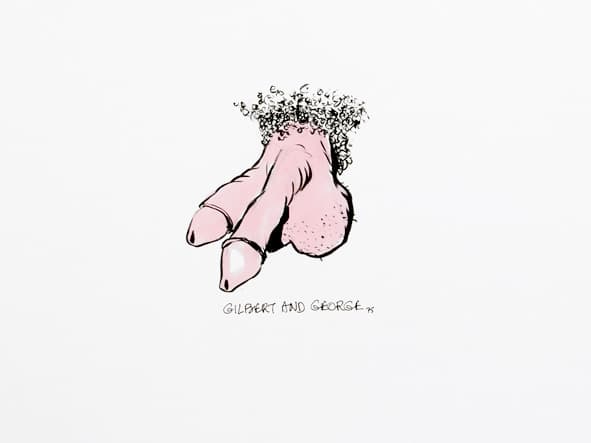
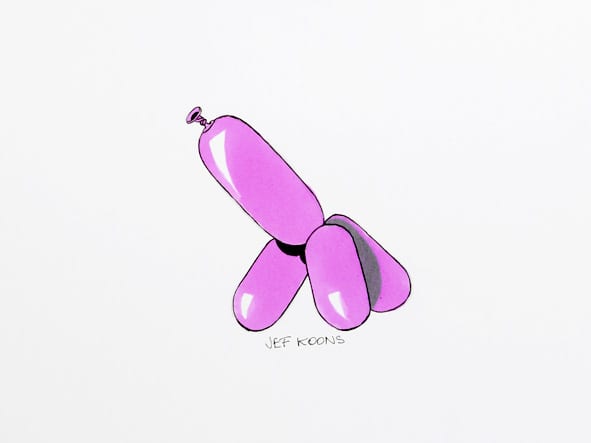
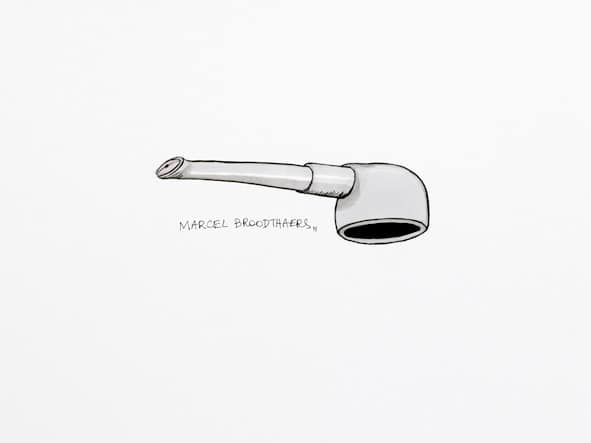
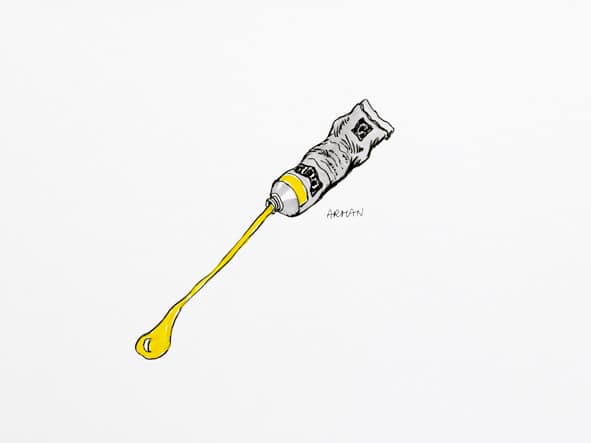
En 1973, Jacques Charlier entame une série qu’il poursuivra plus de trente ans : les portraits imaginaires et caricaturaux du « sexe » des grandes figures de l’art moderne et contemporain. Le principe est d’une simplicité provocante — un organe inventé, dessiné comme un emblème, encadré d’or et posé sur fond de rideau de théâtre — mais il dresse en creux toute une histoire de l’art vue par la libido et l’humour, de Marcel Duchamp jusqu’aux artistes les plus en vue du tournant du siècle.
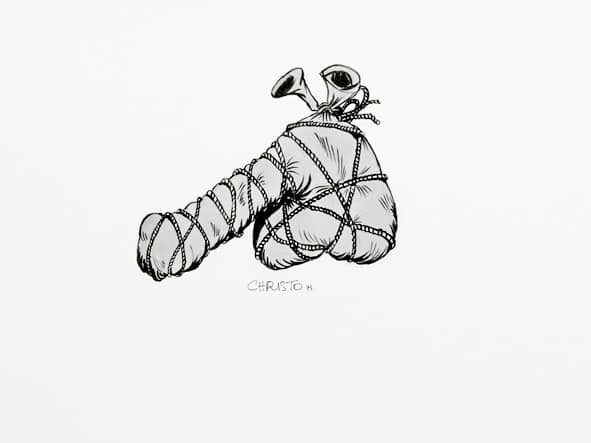
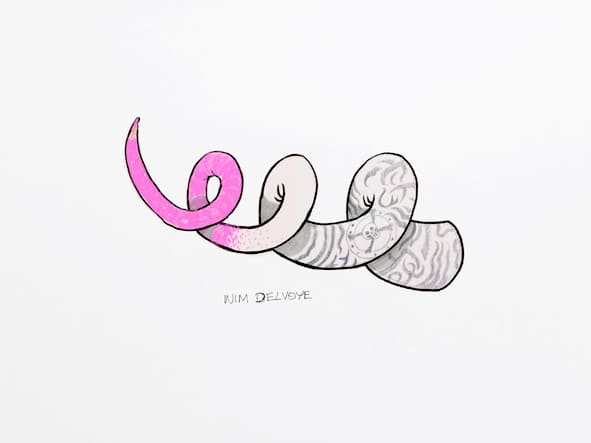
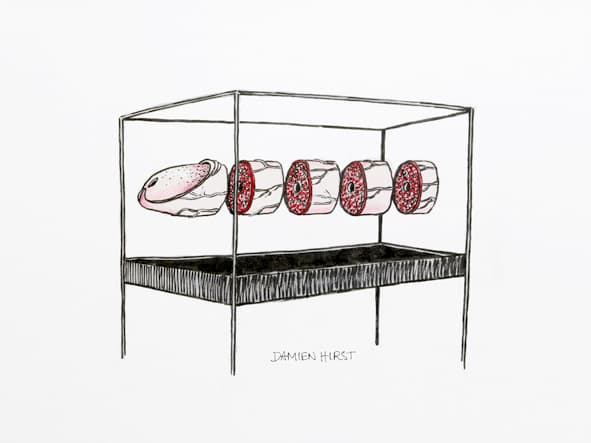
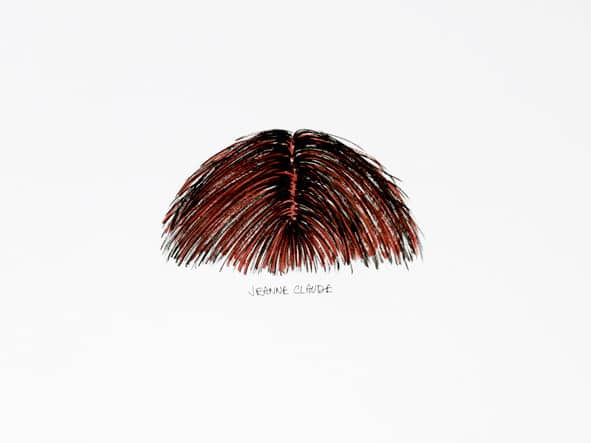
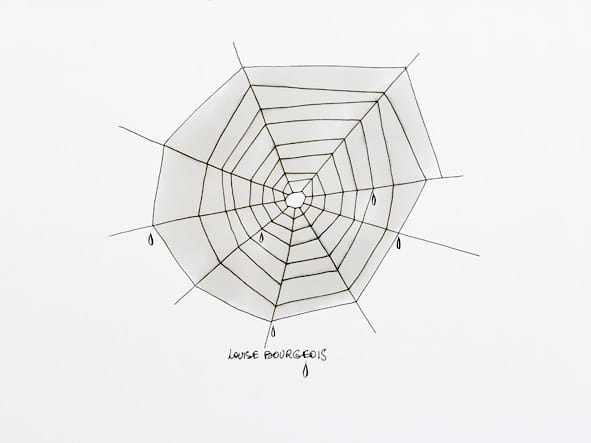
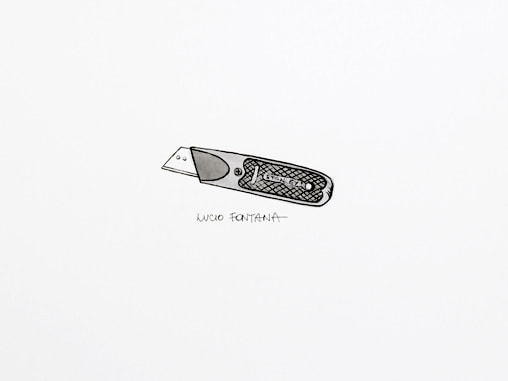
La galerie des « modèles » est un who’s who du XXᵉ siècle : Christo et Jeanne-Claude, Jeff Koons, Damien Hirst, Wim Delvoye, Gilbert & George, Marcel Broodthaers, Arman, Louise Bourgeois, Lucio Fontana… Chacun se voit attribuer un sexe à sa mesure — celui de Christo soigneusement emballé, celui de Koons gonflé puis dégonflé. Sous la farce, c’est le star-system de l’art et son culte des grands noms que Charlier met en boîte, fidèle à l’ironie qui traverse toute son œuvre.
La censure de Venise
En 2009, le projet est choisi pour représenter la Communauté française de Belgique en marge de la Biennale de Venise, avec le soutien officiel de la ministre de la Culture Fadila Laanan et, comme commissaire, Enrico Lunghi, alors directeur du Mudam à Luxembourg. Tout semble en ordre lorsque, au dernier moment, le projet est interdit : le président de la Biennale Paolo Baratta et son directeur Daniel Birnbaum se renvoient la responsabilité d’un refus jamais vraiment motivé, tandis que la Ville de Venise invoque « le bon sens et la pudeur » pour bloquer l’affichage des œuvres dans ses rues. Une querelle que Charlier compare volontiers à la Contre-Réforme, quand on cachait d’une feuille de vigne le sexe des statues de la Renaissance.
« Libérer Venise »
Plutôt que de renoncer, Charlier et Lunghi ripostent sous le mot d’ordre « Libérer Venise ». La ministre débloque les moyens d’affréter un bateau qui vient mouiller au cœur de la cité, entre les Giardini et l’Arsenale, sur la Riva dei Sette Martiri. Du 3 au 7 juin 2009, l’embarcation devient un centre de documentation flottant où le public découvre l’exposition en miniature et l’ensemble du dossier de cette « querelle médiévale ». En écho, les cent posters s’exposent la même année au Palais des Beaux-Arts de Bruxelles et entament une tournée européenne — du Mudam de Luxembourg au M HKA d’Anvers, du Musée Rops de Namur à Liège, jusqu’à Bergen, Metz (Frac Lorraine), Belgrade et Linz.
« Il n’y avait pourtant rien de bien méchant : cent caricatures de sexes d’artistes. »Jacques Charlier
Ce qui aurait pu n’être qu’une plaisanterie d’atelier est ainsi devenu, par la grâce de la censure, l’une des œuvres les plus commentées de Charlier : une démonstration en acte sur la liberté de l’art, la pudibonderie des institutions et la vanité du marché — menée, comme toujours chez lui, avec le sourire.
Vidéo autour du projet « 100 sexes d’artistes ».
Le livre
Livre d’artiste
100 sexes d’artistes : 1973–2009
Repères : série commencée en 1973 ; projet pour la Biennale de Venise 2009 (Communauté française de Belgique, commissaire Enrico Lunghi) ; censure puis présentation sur un bateau, Riva dei Sette Martiri, Venise, 3–7 juin 2009 ; exposition au Palais des Beaux-Arts (BOZAR), Bruxelles, 2009, et tournée européenne.
Work · 1973–2009 · Venice / Brussels
A series of one hundred posters · 1973–2009. Selected for the 2009 Venice Biennale, censored at the last minute, then shown on a boat moored in Venice and across Europe.
In 1973 Jacques Charlier began a series he would pursue for more than thirty years: imaginary, caricatured portraits of the “genitals” of the great figures of modern and contemporary art. The principle is provocatively simple — an invented organ, drawn like an emblem, set in a gilded frame against a theatre curtain — yet it sketches, in negative, a whole history of art seen through libido and humour, from Marcel Duchamp to the most celebrated names of the turn of the century.
The gallery of “sitters” reads like a twentieth-century who’s who: Christo and Jeanne-Claude, Jeff Koons, Damien Hirst, Wim Delvoye, Gilbert & George, Marcel Broodthaers, Arman, Louise Bourgeois, Lucio Fontana… Each is granted a sex to match — Christo’s neatly wrapped, Koons’s inflated then deflated. Beneath the joke, Charlier is needling the art world’s star system and its cult of big names, true to the irony that runs through his entire body of work.
The Venice censorship
In 2009 the project was chosen to represent the French-speaking Community of Belgium on the fringe of the Venice Biennale, with the official backing of Culture Minister Fadila Laanan and, as curator, Enrico Lunghi, then director of Mudam in Luxembourg. Everything seemed settled when, at the last moment, the project was banned: Biennale president Paolo Baratta and director Daniel Birnbaum passed the blame for a refusal that was never really explained, while the City of Venice invoked “common sense and decency” to block any public display of the works in its streets. It was a quarrel Charlier liked to compare to the Counter-Reformation, when a fig leaf was used to hide the genitals of Renaissance statues.
“Free Venice”
Rather than give up, Charlier and Lunghi struck back under the slogan “Free Venice.” The minister released the funds to charter a boat, which dropped anchor in the heart of the city, between the Giardini and the Arsenale, at the Riva dei Sette Martiri. From 3 to 7 June 2009 the vessel became a floating documentation centre where the public could discover the exhibition in miniature and the full file of this “medieval squabble.” In echo, the hundred posters were shown that same year at the Palais des Beaux-Arts in Brussels and set off on a European tour — from Mudam in Luxembourg to M HKA in Antwerp, from the Musée Rops in Namur to Liège, and on to Bergen, Metz (Frac Lorraine), Belgrade and Linz.
“And yet there was nothing so terrible about it: a hundred caricatures of artists’ genitals.”Jacques Charlier
What might have remained a studio prank became, thanks to the censorship, one of Charlier’s most discussed works: a live demonstration on the freedom of art, the prudishness of institutions and the vanity of the market — carried out, as always with him, with a smile.
Video about the “100 sexes d’artistes” project.
The book
Artist’s book
100 sexes d’artistes: 1973–2009
Key facts: series begun in 1973; project for the 2009 Venice Biennale (French Community of Belgium, curated by Enrico Lunghi); censored, then shown on a boat at the Riva dei Sette Martiri, Venice, 3–7 June 2009; exhibited at the Palais des Beaux-Arts (BOZAR), Brussels, 2009, and on a European tour.
Werk · 1973–2009 · Venetië / Brussel
Reeks van honderd posters · 1973–2009. Geselecteerd voor de Biënnale van Venetië 2009, op het laatste moment gecensureerd, daarna getoond op een boot in Venetië en in heel Europa.
In 1973 begint Jacques Charlier een reeks die hij meer dan dertig jaar zal voortzetten: imaginaire, karikaturale portretten van het « geslacht » van de grote figuren uit de moderne en hedendaagse kunst. Het uitgangspunt is provocerend eenvoudig — een verzonnen orgaan, getekend als een embleem, in een gouden lijst tegen een theatergordijn — maar het schetst in negatief een hele kunstgeschiedenis gezien door libido en humor, van Marcel Duchamp tot de meest gevierde namen van de eeuwwisseling.
De galerij van « modellen » leest als een who’s who van de twintigste eeuw: Christo en Jeanne-Claude, Jeff Koons, Damien Hirst, Wim Delvoye, Gilbert & George, Marcel Broodthaers, Arman, Louise Bourgeois, Lucio Fontana… Elk krijgt een geslacht op maat — dat van Christo zorgvuldig verpakt, dat van Koons opgeblazen en weer leeggelopen. Onder de grap neemt Charlier het sterrensysteem van de kunstwereld en zijn cultus van de grote namen op de korrel, trouw aan de ironie die zijn hele oeuvre doortrekt.
De censuur van Venetië
In 2009 wordt het project gekozen om de Franse Gemeenschap van België te vertegenwoordigen in de marge van de Biënnale van Venetië, met de officiële steun van cultuurminister Fadila Laanan en, als curator, Enrico Lunghi, toen directeur van het Mudam in Luxemburg. Alles lijkt geregeld wanneer het project op het laatste moment wordt verboden: Biënnale-voorzitter Paolo Baratta en directeur Daniel Birnbaum schuiven elkaar de verantwoordelijkheid toe voor een nooit echt gemotiveerde weigering, terwijl de Stad Venetië « het gezond verstand en de welvoeglijkheid » inroept om elke openbare presentatie van de werken in haar straten te blokkeren. Een twist die Charlier graag vergelijkt met de Contrareformatie, toen het geslacht van renaissancebeelden met een vijgenblad werd bedekt.
« Venetië bevrijden »
In plaats van op te geven, slaan Charlier en Lunghi terug onder het motto « Venetië bevrijden ». De minister maakt de middelen vrij om een boot te charteren, die in het hart van de stad voor anker gaat, tussen de Giardini en het Arsenale, aan de Riva dei Sette Martiri. Van 3 tot 7 juni 2009 wordt het vaartuig een drijvend documentatiecentrum waar het publiek de tentoonstelling in miniatuur en het volledige dossier van dit « middeleeuwse gekibbel » kan ontdekken. In echo worden de honderd posters datzelfde jaar getoond in het Paleis voor Schone Kunsten te Brussel en gaan ze op Europese tournee — van het Mudam in Luxemburg tot het M HKA in Antwerpen, van het Musée Rops in Namen tot Luik, en verder naar Bergen, Metz (Frac Lorraine), Belgrado en Linz.
« Er was nochtans niets ergs aan: honderd karikaturen van kunstenaarsgeslachten. »Jacques Charlier
Wat een atelierschertsje had kunnen blijven, werd dankzij de censuur een van Charliers meest besproken werken: een levende demonstratie over de vrijheid van de kunst, de preutsheid van instellingen en de ijdelheid van de markt — uitgevoerd, zoals altijd bij hem, met een glimlach.
Video over het project « 100 sexes d’artistes ».
Het boek
Kunstenaarsboek
100 sexes d’artistes: 1973–2009
Bakens: reeks begonnen in 1973; project voor de Biënnale van Venetië 2009 (Franse Gemeenschap van België, curator Enrico Lunghi); censuur en presentatie op een boot, Riva dei Sette Martiri, Venetië, 3–7 juni 2009; tentoonstelling in het Paleis voor Schone Kunsten (BOZAR), Brussel, 2009, en Europese tournee.